By breadpointofsale January 18, 2026
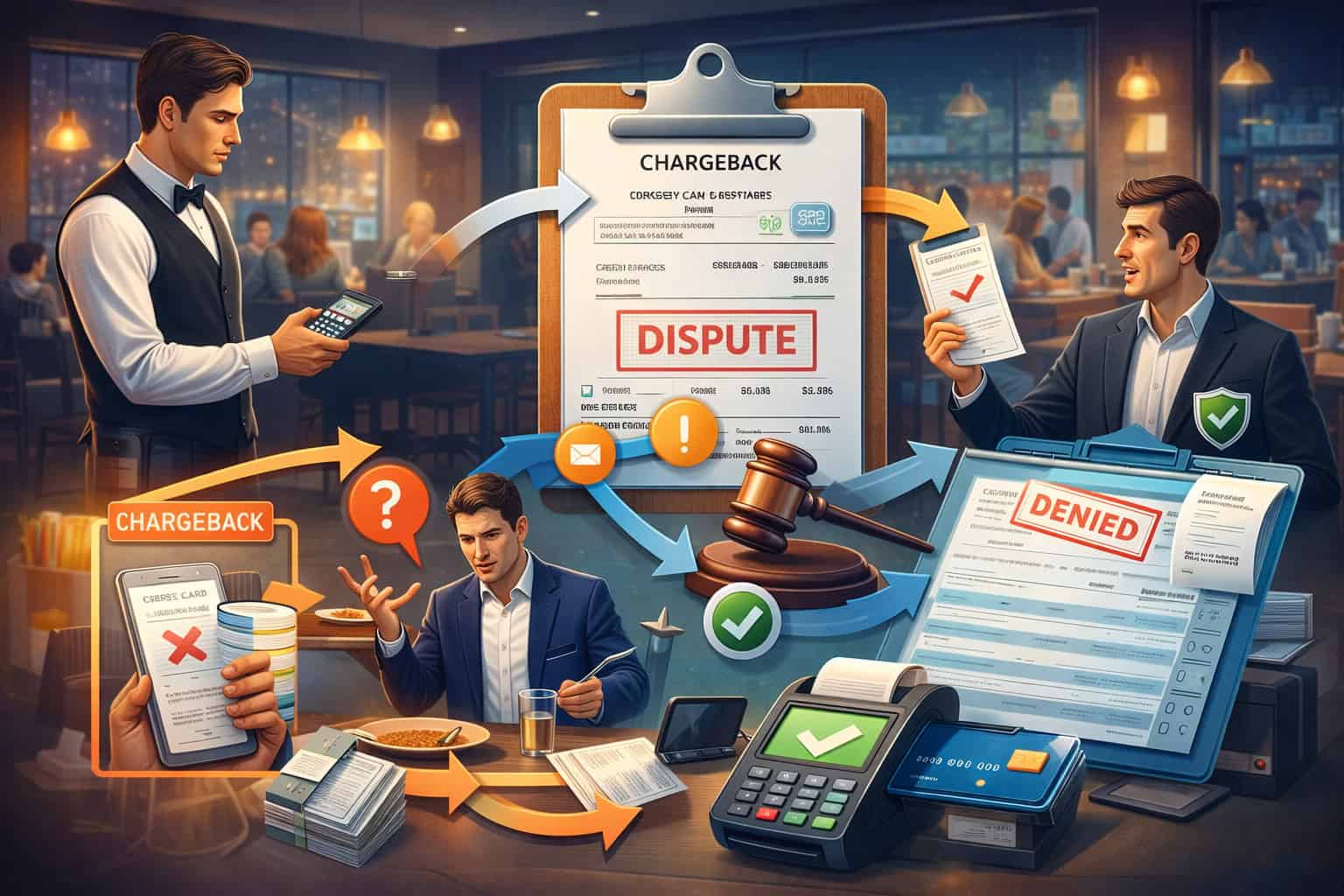
Chargebacks are one of the most frustrating “silent profit killers” in the restaurant world. A single disputed ticket can take back revenue you already counted, add fees, and increase your risk profile with processors and card networks.
The good news is that the chargeback dispute process for restaurants is learnable, repeatable, and winnable when you build your workflow around the evidence card issuers actually accept.
This guide breaks down the chargeback dispute process step by step, using restaurant-specific examples (dine-in, takeout, delivery, catering, bar tabs, tips, no-shows, gift cards).
You’ll learn what to do the moment a dispute hits, how to assemble compelling documentation, how to write representation the right way, and how to prevent “friendly fraud” from becoming a recurring expense line.
What a Chargeback Really Is and Why Restaurants Get Hit So Often
A chargeback is a payment reversal initiated after a cardholder disputes a transaction with their card issuer. The issuer reviews the claim and—depending on reason code, timing, and initial details—may pull funds back from the merchant through the acquirer/processor.
Card networks publish dispute frameworks and supporting document expectations for merchants, including guidance that impacts how you defend a case.
Restaurants are uniquely exposed because the customer experience is fast, variable, and often includes complex elements like tips, split checks, modifiers, bar tabs, delayed gratuity adjustments, delivery handoffs, and third-party ordering.
That complexity creates openings for misunderstandings (“I didn’t authorize that tip”), genuine service issues (“food arrived cold”), and deliberate abuse (“I ate it but I’ll claim it never arrived”).
In the chargeback dispute process for restaurants, your goal is not to prove you’re a good business—it’s to prove the transaction is valid under the network’s dispute rules and that the cardholder’s claim does not match the facts.
You also need to understand the difference between consumer rights disputes (billing error rules, timing, and issuer investigation duties) and card network disputes (reason codes, representation standards, and arbitration).
For example, consumer billing error rules under Regulation Z and the Fair Credit Billing Act include a written notice timeline that is commonly referenced as 60 days from the first statement showing the error, though card network timelines can differ by scenario and reason code.
When you treat chargebacks as an operational system—not random bad luck—the chargeback dispute process becomes a controlled part of risk management.
The Chargeback Dispute Process for Restaurants: A Clear End-to-End Timeline

The chargeback dispute process for restaurants usually follows a predictable chain, even though names differ by processor and card brand:
- Dispute/Inquiry Initiation: The cardholder contacts their issuer (or sometimes the card brand, depending on the program). Some brands may begin with an inquiry/request for information before a full chargeback.
For example, American Express provides a merchant disputes workflow through its Disputes Support Center, including options to respond, accept, or submit documentation. - Issuer Decision and Chargeback Filing: If the issuer believes the claim meets criteria, they file a chargeback and debit flows back through the network to your acquirer/processor. At this point, you’ll see a case in your dispute portal with a reason code/category.
- Merchant Response Window (Representment): You have a limited time to respond. Your processor’s portal will show the due date.
Missing this date is one of the fastest ways to lose—even with strong evidence—because deadlines in the chargeback dispute process are strict and documentation is time-sensitive. Card-network dispute manuals emphasize timely, complete responses. - Issuer Review of Your Evidence: If you submit representation correctly, the issuer reviews. The issuer may reverse the chargeback (you win) or uphold it (you lose).
- Second Cycle, Pre-Arbitration, or Arbitration (Brand-Dependent): If the case escalates, it can move into additional cycles or network arbitration depending on the card brand and scenario. Mastercard’s merchant guide details chargeback cycles and escalation paths.
In the restaurant context, most wins happen before escalation when you provide the right documents early. A mature chargeback dispute process for restaurants aims to win in the first response—because later stages take longer, cost more, and can still end unpredictably.
Reason Codes That Hit Restaurants Most and What Issuers Expect You to Prove
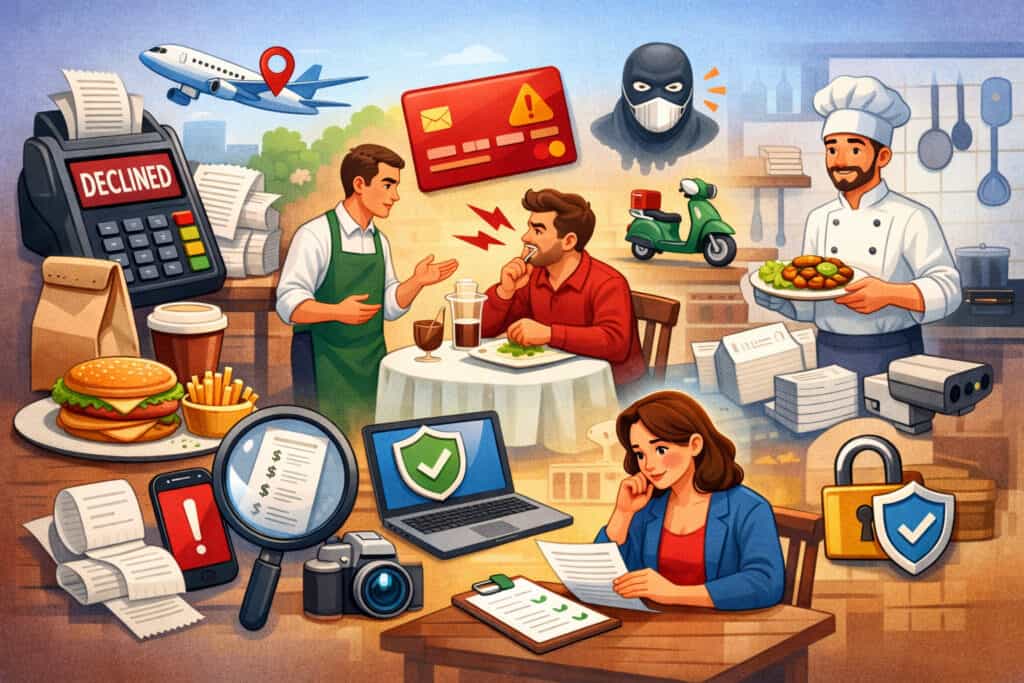
In the chargeback dispute process for restaurants, reason codes (or dispute categories) matter more than emotion or narrative. You win by aligning your evidence to the specific claim type.
Fraud or “Unauthorized Transaction” Disputes
Restaurants often lose fraud disputes when the only proof is a basic receipt. For card-present transactions, issuers look for EMV chip data, contactless token indicators, AVS/CVV (if keyed), device identifiers, and signed receipts when relevant.
If the customer claims the transaction wasn’t theirs, you must demonstrate authorization and proper acceptance procedures consistent with the network rules. Network dispute guides explain documentation expectations and emphasize accurate transaction data.
For restaurants, fraud disputes commonly arise from:
- Keyed transactions (manual entry)
- Phone orders without strong verification
- Delivery where the wrong person accepts food
- Bar tabs where cards are handed to staff and later “don’t recognize” appears
A strong restaurant response includes EMV proof, terminal logs, order metadata, and consistent timeline evidence.
“Services Not Provided / Not Received” and Delivery Claims
Restaurants see a high volume of “I didn’t receive it” disputes for delivery and takeout. Issuers tend to side with the cardholder if there is no delivery confirmation. Visa’s dispute materials address disputes involving merchandise/services not received as a core category.
Winning documentation here is practical:
- Delivery confirmation (photo, GPS, timestamp)
- Proof of address entered by customer
- Third-party courier logs (if applicable)
- Customer communication records (texts/calls)
- “Picked up by” signature or ID check notes for high-value catering
“Not as Described / Dissatisfaction” and Quality Complaints
Food is subjective. That makes quality disputes tricky. Many issuers treat “I didn’t like it” differently than “I never got it.” Your job in the chargeback dispute process for restaurants is to show your refund/complaint process, that the guest accepted service, and that you attempted resolution.
Strong evidence includes:
- Menu and item description at purchase time
- Photos of posted refund policy
- Proof the customer did not contact you before disputing (if true)
- Manager notes, incident report, or comp log showing what happened
“No-Show” and Cancellation Disputes
Restaurants running reservations, tasting menus, private dining, or catering often get disputes when guests claim they canceled or never agreed to the fee. Your best defense is clarity and proof of acceptance:
- Reservation confirmation showing fee terms
- Checkbox acceptance, e-sign, or digital confirmation log
- Reminder text/email logs
- Cancellation timestamp (or absence of cancellation)
Step 1: What to Do the Minute You Receive a Chargeback Notification
The moment a chargeback hits, your response speed and organization determine the outcome more than most owners realize. A disciplined chargeback dispute process for restaurants starts with a “first 30 minutes” checklist.
First, freeze the case timeline: note the received date, the response deadline, the disputed amount, and the reason code. Many merchants lose simply by missing the representation window. Network manuals stress meeting requirements and timelines for dispute handling.
Second, identify the transaction type:
- Dine-in with EMV?
- Contactless wallet?
- Keyed (phone order)?
- Online ordering gateway?
- Third-party delivery marketplace?
Third, pull the full order package immediately:
- POS receipt (itemized)
- Tip adjustment record (if any)
- Payment record (auth + capture)
- Staff notes
- CCTV reference means (date/time/camera location)
- Reservation or online order confirmation messages
Fourth, stop accidental self-sabotage:
- Don’t issue a refund and fight the chargeback unless your processor advises that’s an acceptable strategy for that case type.
- Don’t upload irrelevant documents. Noise lowers clarity.
- Don’t write emotional narratives. Write factual, structured, and aligned to the reason code.
Finally, assign ownership. The chargeback dispute process works best when one trained person (or one role) manages the portal daily, tracks deadlines, and ensures evidence is consistent.
Step 2: Building Restaurant-Grade Compelling Evidence (What Actually Wins)
Most restaurants submit the wrong type of proof. They upload a receipt and hope for mercy. A winning chargeback dispute process for restaurants uses layered evidence—each layer answering a specific question the issuer is deciding.
Core Evidence Layer: Payment and Authorization Proof
You want to prove the transaction was properly authorized and processed:
- EMV chip data confirmation (card-present)
- Contactless token indicators
- Authorization approval code
- Terminal ID and transaction timestamp
- Batch settlement record showing capture
Network dispute guidance emphasizes accurate transaction data and supporting documentation.
Experience Evidence Layer: Service Delivered and Accepted
This is restaurant-specific and often decisive:
- Itemized receipt showing what was ordered
- Seat number/table number, server name, check open/close time
- Kitchen ticket times (order fired, completed)
- Customer signature (if obtained, and relevant)
- CCTV stills (only if clear and time-stamped)
For delivery/takeout:
- Pickup confirmation
- Delivery photo + GPS + timestamp
- Customer messages acknowledging receipt
Policy Evidence Layer: Clear Terms and Disclosure
Issuers like clear, pre-dispute disclosure:
- Refund policy (posted and on receipts)
- No-show/cancellation policy
- Gratuity policy (auto-grat for large parties)
- Modifier/price change disclosure for substitutions
If your policy is vague, the chargeback dispute process becomes harder because the issuer may interpret ambiguity in the cardholder’s favor.
Consistency Evidence Layer: Timeline Narrative in One Page
Add a single-page summary:
- Date/time ordered
- Date/time served or delivered
- How card was presented/verified
- What customer received
- What complaint (if any) was raised and how you handled it
The key is concise paragraphs. Think “claims adjuster,” not “Yelp reply.”
Step 3: Writing Representment That Matches the Dispute Claim
Representment is your formal rebuttal. In the chargeback dispute process for restaurants, the writing is less important than the alignment: every sentence should point to a piece of evidence.
A high-performing representment packet typically includes:
- A cover letter (one page)
- Evidence index (bullets)
- Attachments labeled clearly (Receipt, EMV log, Delivery proof, Policy)
Your cover letter should:
- Restate the claim category in neutral language
- State your position: valid transaction / service delivered / policy disclosed
- Reference exhibits: “See Exhibit B: Delivery confirmation with GPS and timestamp”
- Avoid speculation: don’t guess what the customer “must have done”
Card network merchant dispute guides are explicit that documentation must support the specific dispute basis and be relevant.
For example, if the dispute is “No-show fee not authorized,” you focus on:
- Reservation confirmation showing the fee
- Acceptance logs (checkbox, confirmation text)
- Reminder messages
- Evidence that the seat/time was held
If the dispute is “Tip altered,” you focus on:
- Signed receipt or electronic tip confirmation
- Tip adjustment logs
- Staff workflow proof (who adjusted and when)
- Proof that tip complied with your system rules
The best chargeback dispute process for restaurants uses templates by reason code, so you don’t reinvent your response each time.
Step 4: Handling Brand Differences (Visa, Mastercard, American Express, Discover)
Restaurants often assume all chargebacks behave the same. They don’t. A mature chargeback dispute process respects that brands differ in workflow and tooling.
Visa: Rules, Documentation, and Time Sensitivity
Visa publishes merchant dispute management guidance describing how disputes are handled and what merchants should provide.
For restaurants, Visa disputes often center on:
- Fraud claims (especially card-not-present)
- Not received (delivery)
- Not as described (quality disputes)
Your Visa defense improves when you:
- Provide clean documentation sets
- Match evidence to the dispute condition
- Avoid unrelated attachments
Mastercard: Cycles and Escalation Structure
Mastercard’s merchant chargeback guide details chargeback cycles, second presentment concepts, and escalation language. For restaurants, the practical takeaway is:
- Your first response quality matters
- Your processor’s portal deadlines must be treated as non-negotiable
- Evidence formatting and clarity can reduce back-and-forth
American Express: Centralized Disputes Management
American Express provides merchant-facing disputes workflows through its support center, including steps for responding and submitting documents online. In practice, restaurants should:
- Use Amex’s case tools consistently
- Treat inquiries as high-priority (they often precede chargebacks)
- Keep documentation restaurant-specific (check detail, service timeline)
Discover: Timelines and Early Requests
Discover disputes can include early information requests and short response expectations depending on the scenario and processor workflow. Many merchant guides emphasize that Discover timelines can be strict and require fast turnaround.
For restaurants, the lesson is simple: your chargeback dispute process for restaurants must be fast, because the window can close before your team “gets around to it.”
Step 5: Restaurant-Specific Scenarios and How to Win Them
This is where the chargeback dispute process for restaurants becomes real. Below are the most common scenarios and what a strong response looks like.
Dine-In “I Don’t Recognize This Charge”
These are often friendly fraud: the guest forgets the restaurant name, doesn’t recognize the descriptor, or disputes after a night out.
Winning moves:
- Provide receipt with restaurant name/address/phone
- Provide EMV authorization proof and timestamp
- Provide table/server data if available
- If you have loyalty sign-in or reservation match, include it carefully
Prevention: ensure your descriptor clearly matches your public-facing name and location.
Tip Disputes and Gratuity Adjustments
Tip-related disputes can trigger when:
- The tip line is unclear
- The customer claims it was changed
- Auto-grat wasn’t disclosed
Winning evidence:
- Signed receipt (or digital tip approval)
- Adjustment audit trail
- Auto-grat policy disclosure (menu/receipt signage)
- Proof gratuity applied to a qualifying party size
Prevention: train staff to present totals clearly and standardize receipt handling.
Delivery “Food Never Arrived”
This is one of the hardest categories without good logs.
Winning evidence:
- Proof of delivery (photo + GPS + timestamp)
- Proof of address and customer-entered details
- Message history: “Delivered at 7:42 PM”
- Refund/complaint attempt record (if any)
Prevention: adopt signature or PIN for high-value deliveries and use driver apps that log location.
No-Show Fees for Reservations or Events
Winning evidence:
- Clear disclosure at booking
- Digital acceptance log
- Reminder messages
- Evidence you held inventory/time
Prevention: require explicit acceptance and send a same-day reminder with policy summary.
Step 6: Prevention Systems That Reduce Chargebacks Before They Start
The best chargeback dispute process for restaurants is the one you rarely need because prevention is working. Prevention also improves win rates because you generate better evidence during normal operations.
Key systems:
1) Descriptor and Receipt Clarity
Many disputes begin with confusion. Match your billing descriptor to your restaurant name and location so guests recognize it.
2) Policy Visibility Everywhere
Refund policy, cancellation policy, auto-grat rules—post them:
- At the register
- On the menu
- On checkout screens
- On receipts
3) Staff Training for Dispute-Prone Moments
Train for:
- Split checks and partial payments
- Tip presentation and confirmation
- Handling dissatisfied guests (document manager comps)
- Delivery handoffs and verification steps
Visa’s merchant dispute guidance explicitly encourages merchant training and operational practices to minimize disputes.
4) Data Retention and Evidence Hygiene
Set retention policies:
- Keep receipts and POS records for at least the time windows your processor recommends
- Store delivery logs and photos securely
- Keep reservation confirmations and acceptance logs
5) Rapid Customer Service for Refundable Issues
A fast refund is often cheaper than a chargeback plus fee plus risk. Your prevention playbook should include when to refund vs. fight—based on dollar amount, evidence quality, and customer history.
Step 7: Metrics, Chargeback Ratios, and Processor Risk (Why It Affects Pricing)
Restaurants sometimes treat chargebacks as isolated losses. Processors and networks treat them as signals. High chargeback rates can trigger:
- Increased monitoring
- Higher reserves
- Higher processing costs
- Account termination risk in extreme cases
A strong chargeback dispute process for restaurants includes a monthly scorecard:
- Count of disputes
- Win rate
- Top reason categories
- Disputes by channel (dine-in vs delivery vs online)
- Disputes by staff shift or location
- Refunds issued before disputes (a key indicator of policy clarity)
The practical outcome: when you can prove you run a controlled operation with consistent dispute handling, you often have a better position in pricing and risk conversations with your processor.
Future Predictions: Where the Chargeback Dispute Process for Restaurants Is Heading
The chargeback dispute process is getting more data-driven and faster. Based on card brand focus areas and industry tooling trends, here are realistic shifts restaurants should prepare for:
- More digital proof expectations: Issuers increasingly expect structured evidence: device data, delivery geolocation, order metadata, and clear customer communications—not just a receipt. As more ordering goes digital, “digital exhaust” becomes the deciding factor.
- Shorter practical response windows: Even when official windows remain the same in rulebooks, processors’ operational deadlines and rapid issuer workflows mean restaurants must respond quickly. Mastercard and Visa continue to refine dispute rules language and workflows, which tends to reward fast, clean submissions.
- More disputes tied to third-party delivery: As marketplaces and aggregators remain common, restaurants will keep seeing “not received” and “not as described” claims. Restaurants that do not control last-mile proof will need stronger contracts, better handoff logging, and clearer customer messaging.
- Automation in representation preparation: More restaurants will adopt tools that auto-compile receipts, logs, and delivery proof into reason-code-specific packets. The competitive advantage will shift from “who knows chargebacks” to “who operationalizes documentation by default.”
If you build your chargeback dispute process for restaurants now with evidence-first operations, you’ll be ahead of the curve rather than scrambling when dispute volumes spike.
FAQs
Q.1: What is the fastest way to win a restaurant chargeback?
Answer: The fastest win in the chargeback dispute process for restaurants comes from submitting a complete, reason-code-matched evidence packet on the first response.
That means you don’t just upload a receipt—you include authorization proof (EMV/contactless indicators), itemized order details, and service delivery confirmation. Card network merchant dispute manuals emphasize the importance of relevant documentation and correct handling steps.
Operationally, the “fastest way” is also structural: build templates for your top five dispute reasons. When a case arrives, your team fills in a one-page summary, attaches the correct exhibits, and submits within 24–48 hours. Speed matters because portals close, deadlines are strict, and late evidence often isn’t reviewed.
For delivery disputes, the single most powerful accelerator is a timestamped delivery confirmation (photo/GPS) because it directly addresses the issuer’s key question: did the customer receive the service? If you can answer that question cleanly, the dispute review becomes simple.
Q.2: Should a restaurant refund the customer or fight the chargeback?
Answer: In the chargeback dispute process, the right move depends on evidence quality, dollar value, and repeat behavior. If the ticket is small and you lack strong evidence, refunding early can be cheaper than losing a chargeback plus fees plus added risk.
But if you have strong proof—especially for friendly fraud, no-show fees with clear acceptance, or card-present EMV dine-in—fighting is often the better long-term decision because it discourages repeat abuse.
A practical rule: if you can prove authorization + delivery of service + clear policy disclosure (when relevant), you should usually fight. If you cannot prove one of those elements, consider refunding quickly and improving your process so the next case is defendable.
American Express and other brands provide merchant dispute portals that make it easier to choose whether to accept or challenge disputes.
Q.3: How long does a customer have to dispute a restaurant charge?
Answer: Timelines vary depending on the dispute basis and the card network, and restaurants should treat this as “it depends.” Consumer billing error rules commonly reference a 60-day window tied to the statement timeline under Regulation Z/FCBA, while network rules can allow different timeframes depending on dispute type.
Because these timing rules can vary by scenario (for example, when a service is expected later, like catering or event deposits), restaurants should retain records longer than they assume.
The operational best practice in a chargeback dispute process for restaurants is to keep core payment and service records for a period that covers typical dispute windows and any processor-specific requirements, rather than relying on a single number.
Q.4: What evidence is most important for delivery and takeout disputes?
Answer: For delivery/takeout, the top three evidence categories in the chargeback dispute process for restaurants are:
- Proof of delivery/pickup (photo, signature, GPS, timestamp)
- Proof the customer provided or confirmed the address/order details (order confirmation logs)
- Communication records (texts, emails, call logs) showing delivery status or customer acknowledgment
Receipts help, but they usually don’t prove the handoff occurred. Issuers are deciding whether service was delivered. Visa’s dispute guidance and common dispute categories make “not received” disputes a core battleground, which is why delivery confirmation is so decisive.
Q.5: Can a restaurant win an “unauthorized” chargeback if the card was dipped or tapped?
Answer: Often, yes—if you provide the right authorization evidence. In the chargeback dispute process, card-present transactions supported by EMV chip or contactless data can be stronger defenses than keyed transactions.
But “unauthorized” outcomes still depend on the exact reason code, how the transaction was processed, and whether required acceptance steps were followed. Card network dispute guides explain how documentation and acceptance conditions influence outcomes.
For the best chance, include terminal transaction details, the authorization approval, and any order/service proof that ties the purchase to a real dining event (table number, check close time, server info). If the dispute is actually “I don’t recognize it,” descriptor clarity and receipt branding also matter.
Conclusion
The chargeback dispute process for restaurants is not about arguing with a customer—it’s about proving validity in a strict framework of reason codes, timelines, and documentation standards.
When restaurants lose chargebacks, it’s usually not because they’re wrong; it’s because they responded late, submitted weak evidence, or failed to match evidence to the claim type.
To win consistently, build your chargeback dispute process around five habits:
- Respond fast and track deadlines like payroll
- Package evidence in layers: authorization, service delivered, policy disclosure, timeline summary
- Write representment that references exhibits and avoids emotion
- Separate dispute playbooks by channel (dine-in vs delivery vs reservations)
- Prevent disputes with clearer policies, better logs, and staff training
Card network merchant dispute guides exist for a reason: disputes follow rules, and merchants who design operations around those rules win more often.