
Managing payments across multiple brands sounds simple until you try to run it at scale: different checkout experiences, different refund policies, different risk profiles, different accounting needs, and different customer expectations—all while you still want one clean view of revenue, disputes, and cash flow.
The core challenge is that payments are both a customer experience layer and a regulated financial workflow, and each brand often pulls those layers in different directions.
When you’re managing payments across multiple brands, you’re designing a system that can standardize what must be consistent (security, compliance, reconciliation, reporting, risk controls) while keeping flexible what should be unique (branding, descriptors, product rules, checkout UX).
If you standardize too much, you break brand conversion and customer trust. If you customize too much, you create chaos: mismatched settlement files, disputes that can’t be tracked, and finance teams stuck doing manual reconciliation.
The goal of managing payments across multiple brands is not merely “accept cards everywhere.” It’s to build a repeatable payments framework that protects margins, improves approvals, reduces chargebacks, shortens month-end close, and makes it easy to launch new brands without rebuilding your stack.
This guide walks through the strategy, merchant setup, compliance, technology, reconciliation, customer experience, and forward-looking trends that matter most—so your multi-brand operation runs like one well-governed system instead of a patchwork of one-off solutions.
Build the right multi-brand payments strategy

A strong multi-brand payments strategy begins with clarity: what must be shared across brands, what must be configurable, and what must be isolated. In practice, managing payments across multiple brands works best when you treat payments like a platform product inside your company.
You define standards, guardrails, and a “paved road” so each brand can move fast without introducing security gaps or finance headaches.
A useful way to start is to identify the handful of outcomes that matter across every brand: higher approval rates, lower fraud, fewer chargebacks, faster settlement visibility, and simpler reconciliation.
Then define which levers move those outcomes: routing, descriptors, risk rules, authentication, tokenization, refunds, and customer communications. Finally, decide where brands are allowed to differ.
For example, one brand might need subscription billing while another is one-time retail; one might be higher ticket and require stricter fraud checks; one might have more phone orders and need different compliance practices.
When you’re managing payments across multiple brands, the most common failure is governance by accident: each brand picks tools independently, customer support handles refunds inconsistently, and finance receives settlement data that doesn’t tie out.
Instead, set a clear operating model: a centralized payments owner (or committee) that sets standards, plus brand-level stakeholders who can request changes backed by data. This approach keeps your payment acceptance consistent enough to reconcile, audit, and secure—while still supporting brand-level optimization.
Brand mapping: separate “brand identity” from “legal and banking identity”
A critical distinction in managing payments across multiple brands is the difference between brand identity and merchant identity.
Customers experience the brand name, logo, and checkout design, but banks and card networks care about legal entities, underwriting, and risk responsibility. If you treat those as the same thing, you’ll end up either overcomplicating your setup or creating compliance exposure.
Start by mapping each brand to: (1) the legal entity selling the goods/services, (2) the bank account receiving settlement, (3) the tax identity, and (4) the customer-facing statement descriptor.
Some organizations run multiple brands under one legal entity and one settlement account for simplicity. Others isolate brands into separate legal entities to manage risk, protect banking relationships, or meet partner requirements.
There isn’t one right answer—the right answer is the one your underwriting profile, accounting structure, and growth plans can support.
This is where managing payments across multiple brands becomes a finance-and-risk decision, not only a technology decision. If one brand is high chargeback, it can impact reserves, pricing, or account stability for other brands if everything is under one merchant profile.
On the other hand, too much separation can add overhead, slow down reporting, and complicate cash management.
The practical best practice is to create shared standards (security, logging, data retention, refund workflow) while using configurable brand profiles (descriptor, fraud thresholds, routing rules, refund windows) that can be tuned without rebuilding your integration.
Set up merchant accounts and processing the right way
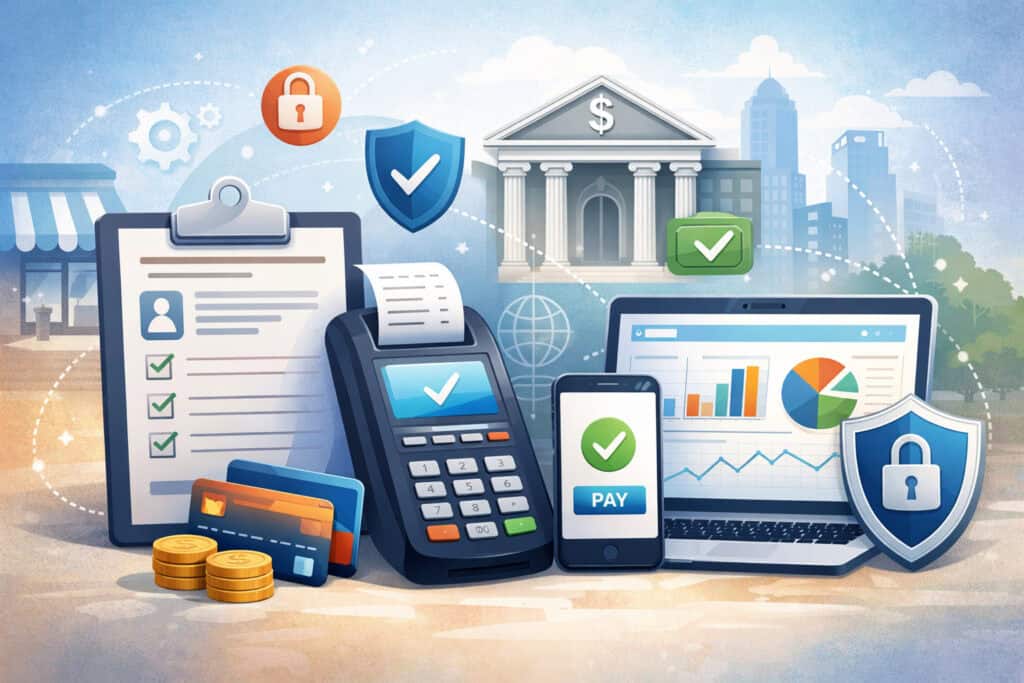
Merchant setup is the foundation of multi-brand payments. If it’s wrong, every other function—risk, reporting, customer support, and accounting—becomes harder.
Managing payments across multiple brands typically involves decisions around merchant accounts, sub-merchants, MIDs, descriptors, and how you will represent brands to customers and banks.
You generally have three common models:
- Single merchants account for all brands: simplest operationally, but shared risk and less control over brand-level reporting unless your gateway/orchestration layer is very strong.
- Multiple merchant accounts (one per brand): clearer reporting and risk segmentation, but more operational overhead and more coordination with processors and banks.
- Hybrid setup: a primary merchant account plus additional accounts for higher-risk or materially different brands (ticket size, refund behavior, chargeback rates).
A key point: banks and processors underwrite merchant profiles based on what you sell, how you sell it, and historical risk signals.
That means if you’re managing payments across multiple brands with different product categories, fulfillment timelines, or refund policies, you must make sure the underwriting story matches each reality. Otherwise, you may see unexpected funding holds, reserve increases, or higher decline rates.
Also, plan for growth. A new brand launch is often delayed not by engineering, but by underwriting paperwork, bank verification, and compliance checks.
If you’re serious about managing payments across multiple brands, build a repeatable onboarding checklist: required documents, standard policies, descriptor rules, refund windows, customer support SLAs, and compliance controls. This turns multi-brand payment enablement into a predictable process rather than a scramble.
Optimize statement descriptors and MIDs for trust, disputes, and analytics
Statement descriptors are one of the most underestimated tools in managing payments across multiple brands. They affect chargebacks, customer confusion, and even approval rates.
If customers don’t recognize the charge on their statement, they dispute it—even when the purchase was legitimate. That dispute becomes a chargeback, costs money, and harms your risk profile.
In multi-brand operations, descriptor strategy should be intentional: each brand should have a descriptor that clearly matches what the customer saw at checkout and in confirmation emails.
Where supported, use dynamic descriptors tied to brand profiles so the same integration can apply different descriptor formats based on the brand. Combine that with consistent receipt formatting, clear customer support contact details, and predictable refund timelines.
Merchant IDs (MIDs) are also important because they determine how transactions are reported, how risk is measured, and how routing decisions can be made.
When managing payments across multiple brands, you want a structure that allows brand-level reporting without forcing entirely separate codebases. Many teams achieve this by using one core payments service and passing brand context (brand ID) that maps to a MID/descriptor/rules profile.
Practically, this makes your data cleaner: chargebacks and refunds can be tied to the right brand automatically, and finance can reconcile faster.
It also makes optimization easier: you can see which brand has the highest declines, which payment methods convert best per brand, and where fraud pressure is rising—then tune policies at the brand level rather than applying blunt global rules that hurt conversion for everyone.
Handle compliance, security, and risk as a shared platform

If your brands share anything, they must share strong security and compliance practices. Managing payments across multiple brands without a consistent compliance baseline is a recipe for gaps: one brand stores data incorrectly, another uses weak authentication, and suddenly your entire organization is exposed.
At a minimum, multi-brand payments governance should cover: access control, logging, encryption, key management, secure software development, vulnerability management, and incident response.
These are not “nice to have.” They influence your ability to pass audits, maintain processor relationships, and avoid expensive remediation.
One of the most important compliance frameworks in card payments is the Payment Card Industry Data Security Standard. PCI DSS v4.0 replaced v3.2.1 after March 31, 2024, and the future-dated requirements became mandatory on March 31, 2025, with minor revisions released as PCI DSS v4.0.1
in June 2024. In multi-brand environments, PCI scope control is a major lever: the more systems touch cardholder data, the more complex (and expensive) compliance becomes.
That’s why modern multi-brand strategies focus heavily on reducing PCI scope through tokenization, hosted fields, or redirect-based checkout experiences—while still delivering a branded experience.
When you’re managing payments across multiple brands, you should aim for a shared security architecture that each brand inherits automatically.
PCI DSS v4.0 and multi-brand scope reduction
PCI DSS v4.0 places strong emphasis on continuous security outcomes: better authentication, stronger monitoring, improved vulnerability management, and more robust controls across the payment environment.
For multi-brand operators, the smartest approach is to reduce the surface area that falls into PCI scope. That means minimizing where card data is captured, processed, transmitted, or stored.
In practical terms, managing payments across multiple brands should include an explicit design rule: brands should never build custom card storage unless there is an unavoidable business reason and the compliance program is mature enough to support it.
Instead, use tokenization and vaulting strategies offered by gateways, processors, or network token services. Tokenization replaces sensitive card numbers with tokens that are less valuable to attackers and can reduce compliance burden when designed correctly.
Mastercard describes how network tokenization replaces the PAN with a randomized token that stays encrypted through the payment journey and can reduce compliance burden and fraud risk.
Security is also tied to fraud outcomes. Strong controls, clean logging, and good monitoring reduce losses and improve your standing with processors. That can lead to better pricing, fewer reserves, and higher account stability.
When managing payments across multiple brands, consistency is your advantage: you can implement one best-in-class security program and apply it everywhere rather than trying to police each brand’s one-off decisions.
Design a scalable payments tech stack for multi-brand operations

The best multi-brand payment stacks are modular. You want a shared core that handles the hard stuff—payments logic, idempotency, retries, webhooks, refunds, reconciliation, reporting—while brands plug into it through configuration.
Managing payments across multiple brands becomes dramatically easier when each brand is not integrating directly with every payment provider. Instead, you build an internal “payments layer” or use a payments orchestration platform that offers a similar abstraction.
A scalable tech stack usually includes:
- A central payments service (internal microservice or unified integration)
- A gateway and/or orchestration layer for routing, retries, and provider switching
- Tokenization and vaulting to manage saved payment methods safely
- Fraud and authentication tools (device intelligence, rules, 3DS where appropriate)
- A reconciliation pipeline that normalizes settlement files across providers
- A reporting layer that offers brand-level metrics and drill-down capability
Why this matters: in multi-brand environments, the cost of change multiplies. A small change to the checkout, a new payment method, or a provider migration can ripple across many brands.
Managing payments across multiple brands successfully means designing for change from day one—so you can swap providers, add payment methods, and tune risk policies without breaking every brand’s checkout.
Payments orchestration and smart routing for approvals and resilience
Smart routing is one of the biggest levers for improving approvals and uptime when managing payments across multiple brands.
Instead of sending all transactions to one processor, orchestration allows you to route transactions based on brand, BIN ranges, card type, region, ticket size, risk score, or historical approval performance. You can also fail over automatically if a provider is down or degraded.
This is not only about uptime. It’s about optimizing approval rates and controlling costs. Some processors perform better for certain card types or industries. Some acquirers have stronger relationships with certain issuers.
When managing payments across multiple brands, routing rules let you tailor processing strategy by brand without fragmenting your engineering teams.
Orchestration also pairs naturally with tokenization strategies. Visa notes that network tokens have become widespread, with more than 10 billion network tokens issued through Visa Token Service as of a major 2024 milestone.
Network tokens can improve authorization performance in some contexts and reduce fraud risk, especially for digital and stored credential use cases.
Finally, orchestration helps with operational control: consistent logging, unified dashboards, centralized dispute workflows, and normalized data. That’s the hidden advantage of managing payments across multiple brands with a shared platform—every improvement benefits all brands, and every incident has one place to investigate.
Strengthen fraud controls and authentication without killing conversion
Fraud prevention in multi-brand environments must be both standardized and brand-aware. Standardized, because security and investigation workflows must be consistent. Brand-aware, because customer behavior differs across brands: one may have repeat buyers, another may be gift-heavy, another may sell high ticket items and attract fraud pressure.
A modern fraud stack usually blends multiple layers: velocity rules, device signals, behavioral analytics, blocklists, allowlists, and step-up authentication. The key is to keep friction low for good customers while stopping high-risk transactions.
When managing payments across multiple brands, your advantage is data: you can learn patterns faster across a wider footprint—but only if your data model is unified.
Authentication is part of this picture. EMV 3-D Secure (3DS) is a major tool for e-commerce fraud management, and EMVCo maintains the specifications and bulletins for versions (including ongoing updates).
The practical takeaway for multi-brand operators is not “turn on 3DS everywhere.” It’s “use 3DS strategically.” Apply it where fraud pressure is high, where liability shift is valuable, or where issuer signals show benefit—while keeping low-risk flows fast.
Network tokenization and 3DS: combine safety with better customer experience
Tokenization and 3DS work best as coordinated layers, not isolated features. Tokenization reduces exposure by replacing card numbers with tokens, and can make stored credentials safer and more durable.
Mastercard highlights that network tokenization replaces sensitive card information with a randomized token and can lower fraud risk while reducing compliance burden. Visa has also emphasized how tokenization supports secure digital payments at scale.
3DS, on the other hand, can provide step-up authentication and additional data exchange between merchant, issuer, and networks. EMVCo’s materials and bulletins show that 3DS specifications evolve over time, and implementers need to keep up with supported versions and configuration guidance.
In multi-brand programs, you should implement 3DS once in the shared platform, then make its usage configurable by brand and risk score. That way, higher-risk brands can require step-up more often without slowing down brands that don’t need it.
The end result is a balanced approach to managing payments across multiple brands: consistent security architecture, shared fraud intelligence, and brand-level tuning. That balance is what protects conversion while reducing disputes and fraud losses.
Master reconciliation, reporting, and cash flow across brands
Reconciliation is where multi-brand payments either become efficient—or painfully expensive. The most common symptom of weak multi-brand payments design is a finance team living in spreadsheets, trying to match orders to deposits while disputes and refunds drift out of alignment.
Managing payments across multiple brands demands a clean data model. Every transaction should carry: brand ID, order ID, payment intent/transaction ID, provider reference, capture/refund events, fees, and settlement batch identifiers.
You want event-level tracking, not just “paid” status. Why? Because payments aren’t a single event—they are a lifecycle: authorization, capture, partial capture, refund, chargeback, representation, reversal, and fee adjustments.
Your reporting should answer, per brand and consolidated: gross sales, net sales, refund rate, dispute rate, approval rate, average ticket, fee rate, and settlement timing.
It should also support drill-down: which payment method is underperforming, which issuer declines are rising, which SKU categories are attracting chargebacks, which customer segments show abnormal refund behavior.
Cash flow matters, too. When managing payments across multiple brands, you want predictable settlement timing and clear visibility into reserves and holds. If one brand triggers elevated risk, it can affect funding behavior.
Segmenting risk where appropriate (via merchant structures) and maintaining clean performance metrics can reduce surprises.
Automate reconciliation with normalized settlement data and clear chargeback mapping
Automation is not optional at scale. A modern reconciliation pipeline pulls data from providers (transactions, balance events, fees), normalizes it, and matches it to internal orders. The key is a mapping layer that can handle differences across processors: naming conventions, fee structures, payout schedules, and dispute identifiers.
Chargebacks require special attention. In multi-brand setups, disputes must map to the exact order and brand, with a consistent evidence workflow. If your data model is inconsistent, your dispute win rate drops because support can’t find correct documentation fast enough.
That’s why managing payments across multiple brands should include centralized dispute tooling: evidence templates, automated retrieval of invoices and shipping confirmations, and standardized response timelines.
Also, use reconciliation outputs to improve operations: identify brands with confusing descriptors, brands with poor refund communication, or brands with higher refund latency that triggers disputes.
Reconciliation is not only an accounting task—it’s a business intelligence layer that helps you reduce loss and improve customer experience.
Deliver a consistent customer experience while preserving brand identity
Customers don’t care how your brands are organized internally. They care that checkout is smooth, payment confirmation is clear, refunds are predictable, and support can resolve issues quickly. When managing payments across multiple brands, customer experience is an operational system—not a one-off design choice.
Start with checkout consistency: even if the visual design differs by brand, the functional experience should follow the same rules. That includes clear price breakdowns, shipping timelines, refund windows, and support contact details.
Confusion leads to “friendly fraud”—a customer disputes because they don’t recognize the charge or don’t know how to request a refund. Good descriptors, consistent receipts, and fast support reduce that.
Refund handling is another major customer experience factor. Multi-brand organizations often create accidental inconsistency: one brand refunds instantly, another takes 10 days, another requires email approval.
That inconsistency becomes a reputational risk. Managing payments across multiple brands means standardizing the refund workflow: intake, validation, processing, confirmation, and settlement visibility—while allowing brand-specific policy differences where truly necessary.
Refunds, disputes, and support: one engine, brand-specific policies
The best approach is “one engine, brand-specific policies.” Build one refunds and disputes engine in your shared payments layer. Then configure policy rules per brand: refund windows, partial refund rules, return requirements, and escalation thresholds.
On disputes, create a centralized playbook: what evidence is required by product category, how to respond to different reason codes, how to handle pre-dispute alerts if you receive them, and how to track outcomes.
This is especially valuable when managing payments across multiple brands because learnings from one brand can improve all brands. If a specific shipping carrier delay increases disputes, that insight can be applied everywhere. If a certain descriptor format reduces “unrecognized” disputes, roll it out across brands.
This is also where instant payments and faster settlement visibility can improve support. FedNow was launched to enable 24x7x365 instant payments via participating financial institutions, and the Federal Reserve has discussed adoption growth and ongoing innovation over time.
While card refunds still depend on card network and issuer processes, offering alternative rails for certain refund workflows (where appropriate) can reduce customer frustration, especially for high-frequency consumer brands.
Future trends and predictions for multi-brand payment systems
Managing payments across multiple brands is evolving quickly because the payment ecosystem is shifting toward tokenization, instant payment rails, and more dynamic risk management. The future is not just “more payment methods.”
It’s more programmable payments operations—where routing, authentication, settlement visibility, and compliance controls become configurable in near-real time.
Instant payments are a major direction. The Federal Reserve has positioned FedNow as an instant payments platform to support a variety of use cases and ongoing network growth.
For multi-brand operators, the practical prediction is that instant payments will expand beyond P2P-style expectations into business operations: supplier payments, marketplace payouts, customer credits, and time-sensitive refunds. That doesn’t replace cards, but it changes how treasury and support teams operate.
Tokenization will deepen. Network token adoption is already substantial, and both Visa and Mastercard have emphasized tokenization’s role in securing digital payments.
As tokenization becomes more standard, multi-brand operators will rely more on token lifecycle management (updater services, token provisioning, cryptogram support) and less on raw card storage—reducing both fraud risk and operational burden.
Fraud systems will also become more data-driven. Expect more adaptive authentication: step-up when issuer or behavioral signals suggest risk, frictionless when confidence is high.
3DS continues to evolve through specifications and bulletins maintained by EMVCo, and implementations will increasingly focus on optimizing outcomes rather than merely “being compliant.”
Finally, compliance will remain a moving target. PCI DSS v4.0 and its timelines already push organizations toward stronger continuous controls.
The prediction for multi-brand operators is simple: the only sustainable approach is a shared compliance platform—central logging, centralized access control, standardized secure development, and continuous monitoring—so each new brand launch inherits a mature compliance posture immediately.
What “best in class” will look like in the next 2–3 years
Over the next few years, best-in-class managing payments across multiple brands will look like this:
- A unified payments layer with configuration-based brand profiles
- Automated reconciliation and near real-time settlement visibility
- Token-first storage with reduced PCI scope and stronger security posture
- Data-driven fraud controls with selective step-up authentication
- Multi-provider routing that optimizes approvals and resilience
- Brand-consistent customer communications to reduce disputes
- Treasury workflows that support faster rails where available
If you build toward that vision now, adding a new brand becomes a configuration exercise rather than a reintegration project. That’s the real win of managing payments across multiple brands: faster growth with less operational drag.
FAQs
Q.1: How do I decide between one merchant account vs multiple merchant accounts?
Answer: When managing payments across multiple brands, the decision comes down to risk isolation, reporting clarity, operational overhead, and growth plans. A single merchant account is simpler: one underwriting relationship, fewer settlement streams, and less coordination.
But it can blend risk. If one brand has higher disputes, longer fulfillment, or more fraud pressure, it can affect reserves, funding holds, and even pricing for the entire portfolio.
Multiple merchant accounts can improve brand-level reporting and isolate risk. They can also help when brands have significantly different business models—like subscription vs one-time retail—or different customer support requirements.
The trade-off is complexity: more onboarding, more settlement files, more portals, and more moving parts for reconciliation. That’s why many organizations choose a hybrid approach: a shared merchant setup for similar brands, and separate accounts for brands that are materially different in risk or operational model.
A practical rule: if a brand’s chargeback rate, refund behavior, ticket size, or fulfillment timeline is meaningfully different, consider isolating it. But regardless of structure, managing payments across multiple brands works best when you keep one shared payments platform and one shared data model so finance and operations can still see everything consistently.
Q.2: What’s the most important thing to standardize across brands?
Answer: The most important standard in managing payments across multiple brands is the payments lifecycle and data model. That includes consistent identifiers (brand ID, order ID, transaction ID), consistent event tracking (auth, capture, refund, chargeback), and consistent logging.
If every brand tracks transactions differently, you lose the ability to reconcile cleanly, investigate disputes quickly, and optimize approval rates across the portfolio.
Security is the second must-standardize area: access controls, encryption practices, vulnerability management, and incident response.
PCI expectations are not brand-specific; gaps in one brand can create organization-wide exposure, especially if infrastructure is shared. PCI DSS v4.0’s direction toward stronger controls makes a shared baseline even more important.
Finally, standardize customer communications around payment confirmation, descriptors, and refund status updates. Even if brands differ in tone and design, customers should always recognize charges and know how to resolve issues.
That reduces “unrecognized” disputes and improves trust—core outcomes when managing payments across multiple brands.
Q.3: How can I reduce chargebacks across multiple brands without adding checkout friction?
Answer: Reducing chargebacks in managing payments across multiple brands is mostly about preventing confusion and improving post-purchase clarity.
Start with statement descriptors that match what customers saw at checkout, plus confirmation emails that repeat the descriptor and support contact details. Many disputes happen because customers don’t recognize the charge. Clear descriptors and clear receipts reduce that dramatically.
Next, standardize refunds and support workflows. If customers can’t get help quickly, they dispute. A centralized refunds engine with brand-specific policy settings lets you keep operations consistent while respecting brand differences.
Also create a brand-level dashboard for dispute reasons: “fraud,” “not received,” “not as described,” “unrecognized.” Each reason has a different fix—shipping updates, better product pages, clearer policies, or improved fraud screening.
Finally, use step-up authentication selectively for higher-risk transactions rather than blanket friction. 3DS is a tool that can help in certain scenarios, and it continues to evolve under EMVCo specifications.
Combined with tokenization strategies emphasized by major networks, you can reduce fraud pressure while keeping checkout smooth for good customers.
Q.4: Does tokenization really help multi-brand operations, or is it just a security checkbox?
Answer: Tokenization is one of the most practical enablers of managing payments across multiple brands because it improves security and operations. From a security angle, tokenization reduces exposure by replacing sensitive card numbers with tokens.
Mastercard explains that network tokenization replaces a PAN with a randomized token that remains encrypted throughout the payment journey, reducing fraud risk and potentially reducing PCI burden.
Operationally, tokenization helps with stored credentials, subscription billing, and customer convenience—especially when customers shop across multiple brands in your portfolio.
If your token strategy is unified, you can allow a customer to save a payment method once and reuse it across brands (where appropriate and disclosed), while still maintaining brand-specific experiences. That makes conversion better, reduces customer effort, and creates a consistent backend model for recurring payments.
Tokenization also supports resilience and routing. Network tokens and token vaulting can make it easier to switch processors or add backups while preserving stored payment methods—depending on your architecture and provider capabilities.
Visa has highlighted large-scale token issuance as part of secure digital payments growth. In short: tokenization is not just a checkbox. It’s a platform capability that makes multi-brand payments safer and easier to scale.
Q.6: Are instant payments going to replace cards for multi-brand merchants?
Answer: Instant payments are unlikely to replace cards entirely in the near term, but they will reshape parts of the ecosystem—especially operational flows like payouts, credits, and certain refund experiences.
The Federal Reserve launched FedNow to support 24x7x365 instant payments through participating institutions, and it has discussed ongoing adoption and innovation.
For managing payments across multiple brands, the key is choosing where instant rails add clear value. Cards remain dominant for many customer purchases because of broad acceptance, consumer protections, and established checkout behavior.
But instant payments can improve treasury efficiency and customer experience in specific areas: faster supplier payments, marketplace payouts, quick customer credits, and time-sensitive disbursements.
The prediction is that multi-brand operators will adopt a “rail-optimized” strategy: cards for many consumer checkouts, ACH for certain bank transfers, instant rails where speed matters, and tokenized credentials for recurring experiences.
This multi-rail approach fits perfectly with the core theme of managing payments across multiple brands: one platform that supports multiple payment types, controlled through brand-level configuration and unified reporting.
Conclusion
Managing payments across multiple brands is ultimately a platform problem: you’re building a repeatable, secure, data-consistent payments engine that can support many customer experiences without multiplying complexity.
The organizations that win are the ones that standardize the right foundations—merchant structure decisions, PCI scope control, tokenization strategy, event-level transaction tracking, centralized refunds/disputes workflows, and reconciliation automation—while leaving room for brand-level optimization in checkout UX, descriptors, and risk rules.
PCI DSS v4.0 timelines reinforce the need for mature, centralized security controls and scope reduction strategies. Tokenization and evolving authentication practices—supported by network initiatives and EMVCo specifications—provide practical tools to reduce fraud and improve digital payment performance.
Meanwhile, instant payment rails like FedNow point toward a future where settlement speed and always-on payment operations matter more for both customer experience and treasury workflows.
If you take one principle from this guide, make it this: managing payments across multiple brands should be configuration-driven, not custom-code-driven.
Build one robust payments layer, define brand profiles, enforce shared security and compliance, and make reporting and reconciliation unified by design. That’s how you scale brand growth while keeping approvals high, disputes low, and finance operations sane—today and as the payments landscape continues to evolve.