By breadpointofsale December 10, 2025
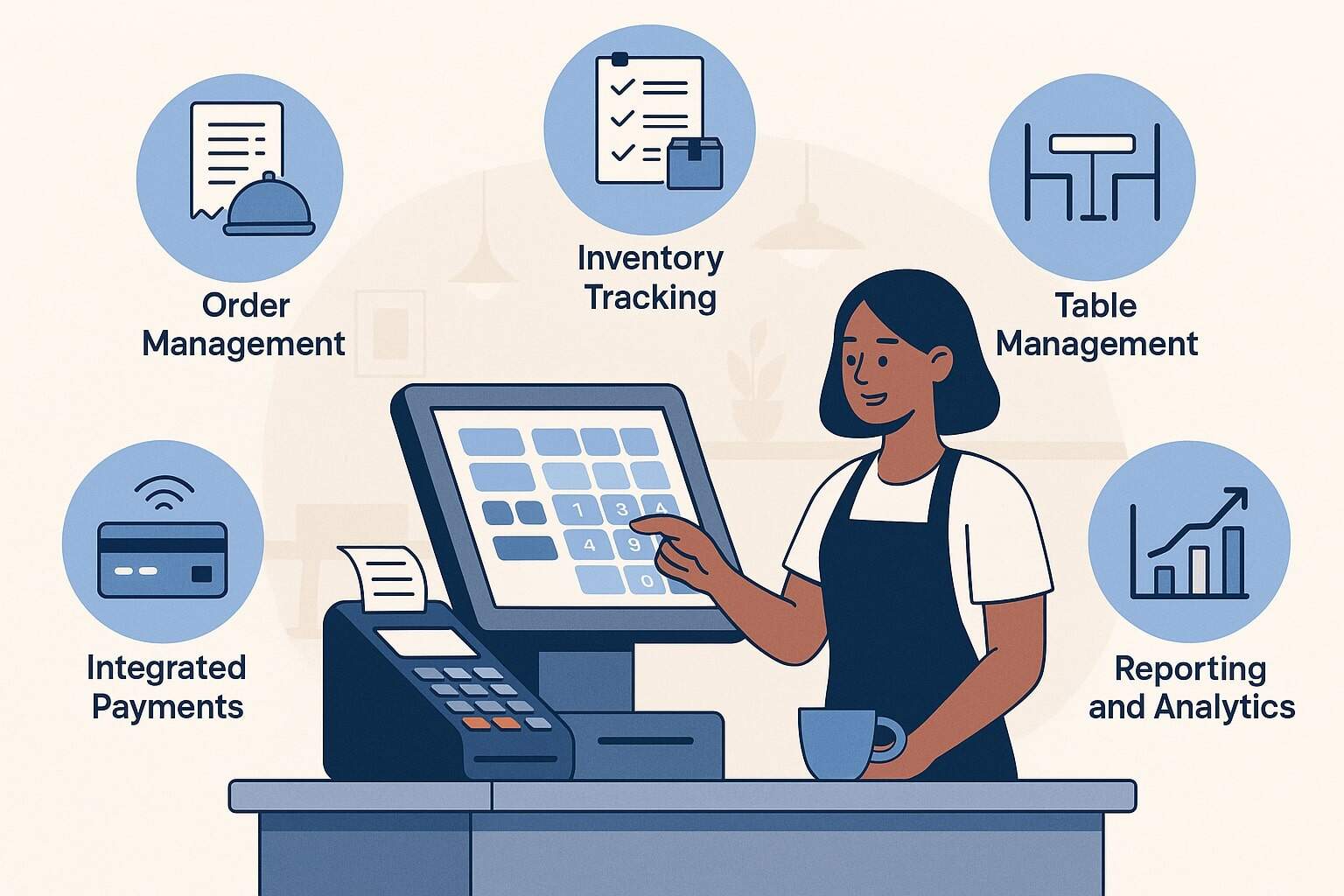
Running a restaurant is hard enough without wrestling with clunky software, handwritten tickets, and lost orders. A modern restaurant POS system isn’t just a digital cash register anymore—it’s the operational backbone of your business.
The right POS features for restaurants can reduce errors, speed up service, improve guest experiences, and give you the data you need to grow.
In this guide, we’ll walk through the must-have POS features for restaurants, explain why each one matters, how it works day-to-day, and where the technology is headed over the next few years.
This article is written for owners, managers, and operators who want a practical, SEO-friendly, and future-focused overview of restaurant POS systems.
What Is a Restaurant POS System and Why It Matters
A restaurant POS system is the central hub where orders, payments, inventory, staffing, and reporting all come together. It replaces old-school cash registers and handwritten tickets with software and hardware that connect the front of the house, bar, and kitchen.
At a basic level, POS features for restaurants handle orders and payments. At an advanced level, they automate workflows, sync with online ordering, track real-time sales, and tie into your accounting, payroll, and marketing tools.
The modern restaurant POS runs on tablets, terminals, or mobile devices and often operates in the cloud. That means your menus, prices, and floor plans can update across every device instantly.
Cloud-based POS features for restaurants also give owners access to real-time data from anywhere, which is critical if you manage multiple locations or shifts remotely. Instead of waiting for end-of-day reports, you can see sales, voids, and labor percentages in real time and make decisions on the fly.
A strong POS platform directly affects your guest experience. Faster ordering, fewer mistakes, and smoother payments translate into happier guests and better reviews. When you invest in the right restaurant POS features, you’re not just buying software—you’re building the operational foundation for your restaurant’s profitability and growth.
Over the next few years, POS systems will continue to evolve into intelligent control centers, powered by automation and data, instead of just transactional tools.
Intuitive Order Entry and Customization Tools
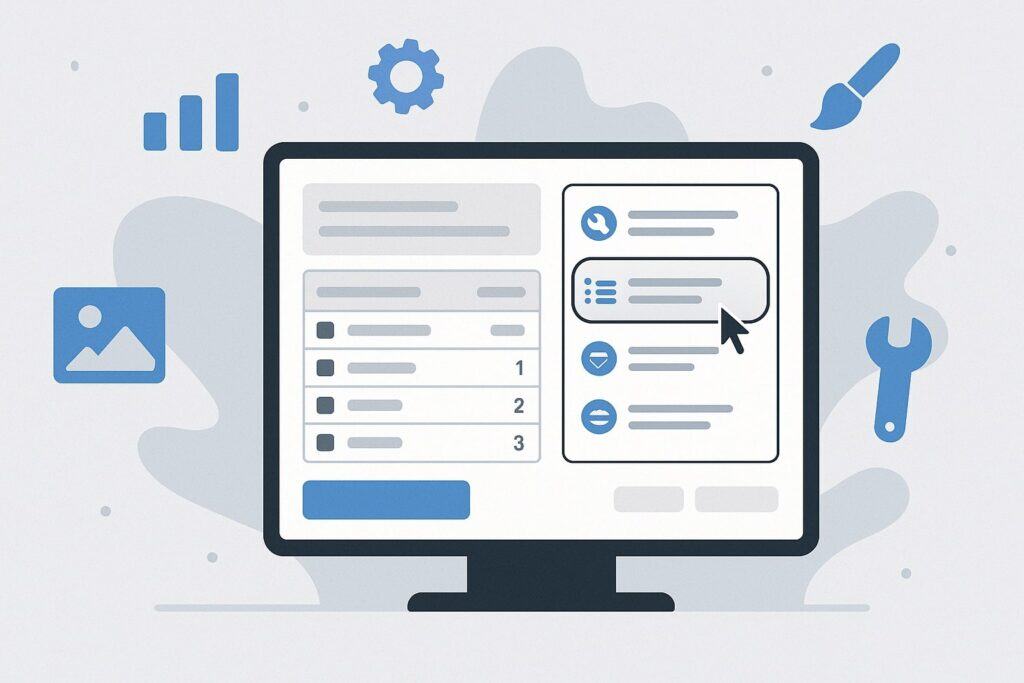
One of the most critical POS features for restaurants is intuitive order entry. Your servers, bartenders, and counter staff use this screen hundreds of times a day. If it’s confusing, slow, or hard to navigate, you’ll see mistakes, frustration, and long ticket times.
An ideal restaurant POS offers a clean, touchscreen interface with clearly labeled menu items, categories, and modifiers. Staff should be able to learn the basics in a single shift.
Customizations are a huge part of restaurant service—no onions, extra cheese, dressing on the side, allergies, and more. A strong restaurant POS system lets you build flexible modifiers, upsell options, and special instructions into the order flow.
Instead of typing out notes every time, staff can tap quick buttons for “no salt,” “gluten-free,” or “sub fries for salad.” This reduces the chance of misunderstanding and makes the order easier for the kitchen to read and execute.
Future-focused POS features will go even further. Expect smarter suggestion engines that automatically prompt servers with relevant add-ons based on the dish, time of day, or guest history.
For example, when a burger is selected, the POS might suggest premium toppings or drink pairings. As AI-powered POS features for restaurants expand, order entry will become more predictive, anticipating what servers need before they search for it, and reducing overall training time for new hires.
Table Management and Floor Plan Controls
For full-service restaurants, table management is a must-have POS feature. Your POS should mirror your real-life floor plan with tables, sections, bar seats, and patios.
Servers can see at a glance which tables are occupied, which are waiting for food, and which are ready to be turned. A detailed floor plan helps hosts seat guests more efficiently and prevents double-seating a busy server while another server is standing idle.
A strong restaurant POS system lets you define sections, assign servers, and track table status in real time. For example, you can see which tables have just been sat, which have orders in progress, and which are waiting on dessert.
This helps managers spot bottlenecks and step in when needed. Integrated POS features for restaurants also show expected check times, so you can better predict when tables will open up during rushes.
Looking ahead, table management will continue to merge with waitlist apps, reservations, and guest profiles. Your restaurant POS system will likely integrate with reservation platforms so that hosts see guest names, visit history, and preferences when seating them.
Predictive analytics can help forecast table turns based on party size, server performance, and daypart trends. This future-ready view of table management will help operators squeeze more revenue out of every seat without making guests feel rushed.
Kitchen Display Systems (KDS) and Ticket Routing
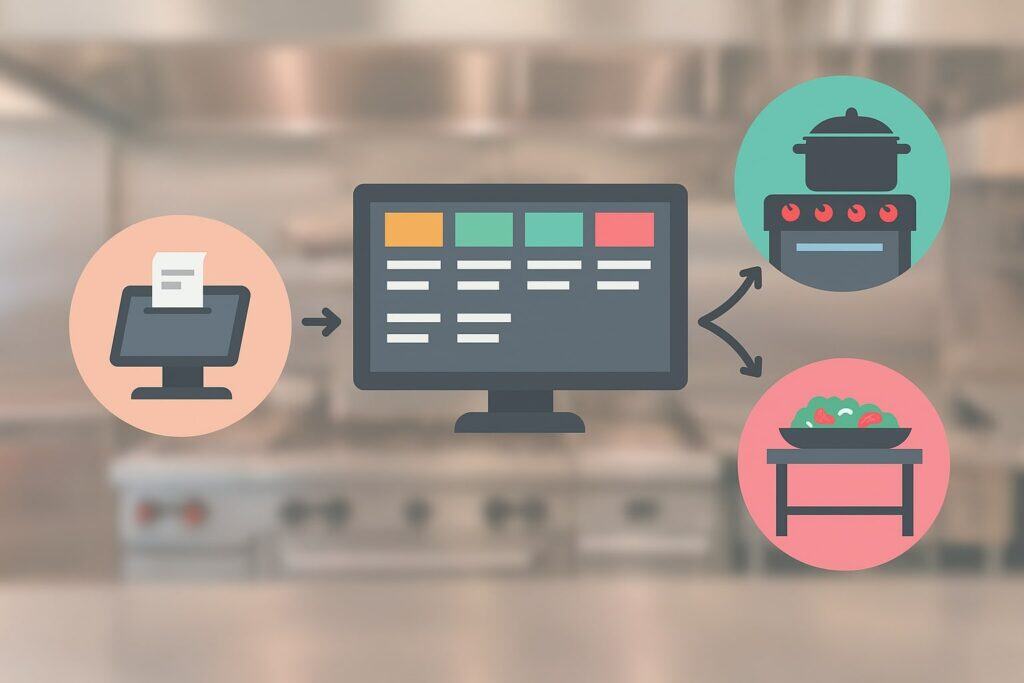
In a busy kitchen, speed and accuracy are everything. A modern restaurant POS should support Kitchen Display Systems (KDS) that replace paper tickets with digital screens.
Orders flow from the POS directly to the appropriate stations—grill, salad, dessert, bar—often color-coded by course, status, and ticket time. This is one of the most powerful POS features for restaurants when it comes to reducing chaos and miscommunication.
With a KDS, cooks can see modifiers, course timing, and special instructions at a glance. They can bump items when finished, and the system tracks how long each order took. Managers gain visibility into kitchen performance, including late tickets and bottlenecks.
Digital routing helps ensure a steak and a salad for the same table hit the pass at the same time. It also makes it easier to handle split courses, coursing changes, and re-fires.
In the future, expect KDS screens to become even more intelligent. Advanced POS features for restaurants may automatically prioritize tickets based on promised wait times, online orders, delivery windows, or VIP guests. Integration with kitchen printers, label printers, and expo stations will continue to improve.
Some systems are already experimenting with AI that suggests re-sequencing certain items to minimize wait times during peak hours. Over time, this will turn your KDS into a smart traffic controller, not just a digital ticket board.
Omnichannel Ordering: Dine-In, Takeout, and Delivery
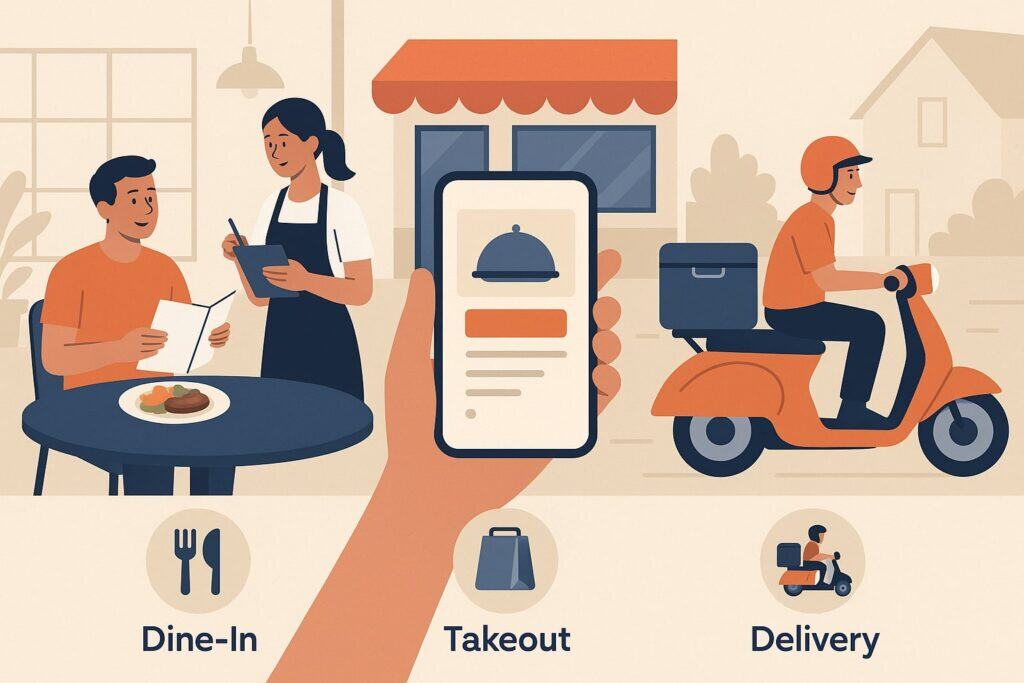
Modern guests expect flexibility. They want to dine in, order ahead, pick up curbside, or get delivery—all without friction. That’s why omnichannel ordering is one of the most essential POS features for restaurants today. Your restaurant POS system should unify all these order types into a central queue, no matter where the order originated.
This means that online orders from your website, third-party delivery platforms, and phone orders should all flow into the same POS system. Staff shouldn’t have to re-enter orders from multiple tablets or printouts, which leads to errors and wasted time.
Instead, well-designed POS features for restaurants consolidate these channels, allowing you to manage menus, prices, and availability in one place. You can pause certain items, restrict delivery zones, or set separate prep times for takeout and delivery.
As the future of restaurant tech unfolds, omnichannel POS systems will further blur the line between digital and on-premise channels. Expect more native integrations with delivery services, better order throttling to prevent the kitchen from being overwhelmed, and automated communication with guests about order status.
Restaurants that embrace omnichannel POS features will be better positioned to serve guests wherever they are—on-site, at home, or on the go—without sacrificing operational control.
Integrated Online Ordering and Branded Web Experience
It’s no longer enough for restaurants to rely only on third-party delivery apps. One of the most valuable POS features for restaurants is integrated first-party online ordering. This is typically a branded website or ordering page that connects directly to your POS.
Guests can browse your menu, customize orders, schedule pickup times, and pay online. The orders drop straight into your restaurant POS system and route to the kitchen without re-entry.
Integrated online ordering offers several advantages. You keep more of your margin by avoiding high third-party commissions. You own the customer relationship, email addresses, and order history. You maintain full control over your menu, pricing, and promotions.
These POS features for restaurants ensure that when guests search for your brand online, they land on your official ordering experience instead of a generic marketplace.
Looking ahead, online ordering features will become more personalized and intelligent. Restaurant POS systems will use customer data to highlight popular dishes, showcase tailored recommendations, and surface relevant promotions.
Expect more use of progressive web apps, loyalty integration, and digital wallets in the ordering experience. In the near future, voice ordering, chat-based ordering, and conversational interfaces may also tie directly into your POS, allowing guests to place orders through smart devices or messaging platforms.
Payment Processing and Contactless Payments
Streamlined, secure payments are at the core of any restaurant POS system. Your POS should support multiple payment methods, including credit and debit cards, EMV chip, digital wallets, and contactless payments.
Guests have grown used to tapping their card or phone, and restaurants that can’t accept contactless payments risk feeling outdated. Flexible POS features for restaurants allow you to accept split checks, separate items by guest, and handle tips gracefully.
Modern restaurant POS platforms also support pay-at-table via handheld devices or guest-facing terminals. Servers can bring the payment device directly to the table, eliminating the need to take cards away and reducing card fraud risk.
For quick-service operations, integrated customer-facing displays make it easy for guests to confirm items, tip, and pay without slowing down the line. Strong POS features for restaurants in this area also include offline mode and tokenization for secure storage of card data.
The future of restaurant payments is moving toward even more frictionless experiences. Expect deeper integration with digital wallets, QR code payments, and loyalty-linked payment methods that automatically apply rewards.
Some systems are experimenting with biometric and face recognition payments in limited contexts, though privacy and security considerations will be key. Over the next few years, restaurants that adopt advanced POS features for payments will be able to shorten checkout times, improve perceived safety, and gather more accurate sales data.
Mobile and Tableside Ordering
Mobile and tableside ordering have become must-have POS features for restaurants, especially in busy dining rooms and patios.
With handheld devices or tablets, servers can take orders directly at the table and send them instantly to the kitchen or bar. This reduces the back-and-forth time between POS terminals and the floor, and it cuts down on transcription errors from handwritten notes.
Tableside ordering also supports real-time upselling. When a server enters an entree, the POS can suggest appetizers, sides, or drinks. If an item is sold out, the POS can alert the server instantly and suggest an alternative.
These restaurant POS features make it easier for servers to offer great experiences without relying solely on memory. Handheld devices can also enable pay-at-table, allowing guests to review their checks, split the bill, and tip without waiting for a printed receipt.
In the coming years, mobile POS features for restaurants will become even more powerful. Expect better battery life, more rugged hardware for harsh environments, and improved offline support.
Restaurants are also experimenting with staff-less models using QR code menus and guest-owned devices, where guests scan, order, and pay from their phones.
While this won’t replace full service everywhere, the combination of mobile ordering and traditional table service will become a flexible toolkit that operators can adjust based on concept and guest expectations.
Menu Management, Modifiers, and Pricing Controls
Menus change constantly: new dishes, seasonal ingredients, 86’d items, special pricing, and limited-time offers. That’s why strong menu management is one of the core POS features for restaurants.
Your POS should let you build and edit menus quickly, update prices across all devices, and manage multiple menus for different dayparts or service types.
With robust menu management, you can create categories, subcategories, and modifiers that reflect your real-world offerings. You can define required modifiers (like cooking temperature) and optional add-ons (like extra toppings).
These restaurant POS features help you standardize orders so the kitchen receives clear, consistent instructions. Centralized control allows you to update a price or description once and have it apply everywhere—terminals, handhelds, online ordering, and even integrated delivery menus.
Future-focused menu management in restaurant POS systems will be more data-driven. Expect dynamic pricing features that can adjust prices based on time of day, demand patterns, or ingredient availability.
AI-powered suggestions may highlight underperforming items you should remove or re-engineer. Advanced POS features for restaurants might automatically suggest bundling options, prix fixe menus, or profitable combos based on your sales history and customer preferences.
Inventory Tracking and Ingredient-Level Management
Food costs are one of your biggest expenses, and manual tracking is time-consuming and error-prone. Inventory management has become a must-have POS feature for restaurants, especially as margins tighten and ingredient prices fluctuate.
A strong restaurant POS system will track inventory at the item or ingredient level, deducting quantities automatically as sales come through.
For example, when you sell a burger, the POS can deduct a patty, bun, cheese slice, and portion of fries from your on-hand quantities. Over time, you can compare theoretical inventory to actual counts to spot waste, theft, or portioning problems.
These POS features for restaurants give operators visibility into their true food cost and help prevent stockouts of key items during busy shifts. You can also set par levels and alerts when ingredients run low, so you reorder before you’re in trouble.
In the future, expect deeper integrations between POS inventory modules and suppliers. Automatic purchasing based on real-time stock levels, electronic invoices, and integrated cost updates will become common.
Some forward-looking restaurant POS systems may incorporate AI to forecast demand and suggest optimal order quantities for each ingredient. This level of precision can dramatically reduce waste, improve menu profitability, and simplify back-of-house operations for chefs and managers.
Employee Management, Scheduling, and Permissions
Labor is another major cost center for restaurants, and it’s closely tied to your POS. Modern POS features for restaurants include built-in employee management tools.
Staff can clock in and out through the POS, and their hours automatically feed into payroll exports. Managers can view labor costs in real time as a percentage of sales and adjust staffing levels if necessary.
Employee permissions are also critical. Not every staff member should be able to issue comped items, void checks, or change menu prices. Your restaurant POS system should support role-based permissions so you can control access to sensitive functions.
This reduces fraud, protects your margin, and makes audits easier. Scheduling integrations and labor forecasting features help you cover busy times without overstaffing slow periods.
Looking ahead, employee management tools in POS systems will continue to incorporate more automation. Expect predictive scheduling that leverages historical data, holidays, weather, and local events to recommend staffing levels.
Also, advanced POS features for restaurants may offer built-in communication tools, messaging, and training modules so staff can receive updates, policy changes, or new menu information directly through the system. This helps create a more connected and informed team.
Real-Time Reporting and Analytics
Data-driven decision-making is no longer optional. One of the most powerful POS features for restaurants is robust reporting and analytics. Your POS should provide real-time dashboards for sales, labor, discounts, voids, average check size, and item-level performance. Cloud-based restaurant POS systems give you access to this data from your office, home, or on the road.
With detailed reporting, you can identify your best-selling and lowest-performing menu items, track server performance, and spot unusual patterns like high void rates or excessive discounts. These analytics help you refine your menu, adjust training, and reduce waste.
Over time, you’ll build a clear picture of which dayparts are most profitable, which promotions actually work, and where your POS features for restaurants are creating value.
The future of POS analytics is predictive and prescriptive. Instead of just telling you what happened, systems will forecast what is likely to happen and suggest actions.
For example, your restaurant POS might recommend adjusting staffing on rainy days, highlighting profitable add-ons to promote, or suggesting price updates for certain items. As AI continues to integrate with restaurant POS features, operators will get more actionable insights with less manual report crunching.
Customer Profiles, Loyalty, and CRM Tools
Guest loyalty and retention are critical to long-term restaurant success. Modern POS features for restaurants increasingly include customer relationship management (CRM) and loyalty tools.
These features allow you to build guest profiles that track visit history, favorite items, and order patterns. With this data, you can create personalized offers, birthday rewards, and targeted promotions.
Integrated loyalty programs let guests earn points or rewards automatically when they order, whether in person or online. Restaurant POS systems can apply discounts or freebies based on accumulated points, making the experience seamless.
A strong CRM and loyalty engine inside your POS helps you drive repeat visits, increase average check size, and build a direct relationship with guests instead of relying solely on third-party platforms.
In the future, CRM features in restaurant POS systems will become even more personalized. Expect smarter segmentation, real-time offer engines, and predictive models that identify guests who may be at risk of not returning.
Messaging channels like email, SMS, and push notifications will integrate tightly with your POS features for restaurants, allowing you to send relevant campaigns based on behavior, not just broad demographics.
Guest-Facing Technology: QR Codes, Kiosks, and Self-Ordering
Guest expectations have shifted toward convenience and control. Many concepts now rely on guest-facing technology as part of their standard POS features for restaurants.
QR codes at tables allow guests to scan, view a digital menu, and sometimes order and pay directly from their phones. Self-service kiosks in quick-service and fast-casual environments let guests customize orders at their own pace, reducing line congestion.
Guest-facing technology can boost check sizes by presenting upsell options more consistently than a busy cashier or server. It can also reduce labor strain during peak times.
These restaurant POS features are especially valuable when staffing is tight or menus are complex. However, they should always be implemented with a focus on usability, accessibility, and a clear backup option for guests who prefer traditional interaction.
Looking ahead, guest-facing technology will continue to grow. Expect more intuitive, mobile-optimized interfaces, better integration with loyalty programs, and the gradual introduction of conversational ordering through voice or chat.
Future-ready POS features for restaurants will let you adapt to guest preferences, offering a mix of human service and self-service in a seamless, branded experience.
Integrations with Third-Party Apps and Services
No POS system can do everything perfectly, which is why integrations are crucial. Modern POS features for restaurants include APIs and app marketplaces that allow you to connect with accounting software, payroll systems, delivery platforms, reservation tools, and marketing apps. These integrations save time by eliminating double data entry and manual exports.
For example, your restaurant POS can integrate with accounting tools to automatically sync daily sales, tips, and tax data. It can connect to staff scheduling software to incorporate sales forecasts into labor planning.
It can also connect to review management or email marketing platforms. The more your POS can serve as the central hub, the more efficiently your tech stack will operate.
In the future, integrations will become deeper and more standardized. Open APIs and industry alliances will make it easier for restaurants to choose best-in-class tools while keeping everything connected.
Advanced POS features for restaurants will enable real-time data sharing across systems, not just daily summary exports. This connected ecosystem will give operators a unified view of operations and financial performance.
Security, Compliance, and Data Protection
Security is a non-negotiable part of POS features for restaurants. Handling card payments and storing guest and employee data requires strict compliance with industry standards.
Your restaurant POS system should support encryption, tokenization, and compliance with payment security standards. Strong user permissions and audit logs are also essential to prevent internal fraud and unauthorized access.
Data protection extends beyond payments. Customer profiles, loyalty information, email addresses, and phone numbers must be safeguarded.
A reputable POS provider should offer secure cloud storage, regular updates, and monitoring to protect against threats. For multi-location operators, centralized control over security policies is a must-have POS feature, ensuring consistent standards across sites.
Going forward, expect restaurant POS providers to keep investing heavily in cybersecurity. As more POS features for restaurants move to the cloud and incorporate integrations, the need for robust security and privacy controls will only grow.
You should expect multi-factor authentication, advanced fraud detection, and continuous monitoring to become standard, not optional, features.
Cloud-Based vs. On-Premise POS: What Restaurants Should Choose
One strategic decision is whether to choose a cloud-based or on-premise restaurant POS system. Cloud-based POS features for restaurants run over the internet and store data on remote servers. On-premise systems store data locally and may require dedicated hardware and IT resources.
Cloud-based restaurant POS solutions offer flexibility, remote access, and easier updates. They make it simple to add new terminals, integrate online ordering, or manage multiple locations. They also usually provide automatic backups and disaster recovery.
On-premise systems can offer more direct control and may be preferred by operators who want everything contained on-site, but they often involve higher upfront costs and more complex maintenance.
The industry trend is clearly moving toward cloud-based POS features for restaurants, especially for new openings and growing concepts. Over the next few years, cloud-native systems will continue to innovate faster, offering more integrations, analytics, and AI-driven features.
On-premise systems will remain in niche or legacy environments, but most restaurants that want scalability and modern functionality will choose cloud-first solutions.
Future of Restaurant POS Systems: AI, Automation, and Personalization
Restaurant POS systems are evolving rapidly. The next wave of POS features for restaurants will be driven by AI, automation, and personalization. Instead of just processing transactions, POS platforms will function as intelligent operating systems for your business.
AI-powered forecasting will help predict sales, inventory needs, and labor requirements with greater accuracy. Automation will handle routine tasks like reordering stock, scheduling staff, and sending marketing campaigns.
POS data will fuel personalization engines that tailor recommendations for both guests and managers. These restaurant POS features will help operators reduce waste, increase profitability, and improve guest satisfaction without adding manual effort.
Over time, restaurant POS systems will also play a bigger role in sustainability efforts, tracking food waste, energy usage, and responsible sourcing data. The systems that win in the market will be those that combine powerful POS features for restaurants with user-friendly design, robust security, and deep integration with the broader tech ecosystem.
FAQs
Q.1: What are the most important POS features for restaurants?
Answer: The most important POS features for restaurants include intuitive order entry, table management, kitchen display systems, integrated payment processing, inventory tracking, employee management, and real-time reporting.
For many concepts, omnichannel ordering, online ordering, loyalty, and guest-facing technology are now essential as well. A strong restaurant POS system should connect the front of house, back of house, and back office in one platform.
Q.2: Do small restaurants really need advanced POS features?
Answer: Yes, even small restaurants benefit from modern POS features for restaurants. A single-location cafe or bistro still needs accurate order entry, payment processing, basic inventory tools, and reporting.
Smaller operations often have fewer staff, so automation and organization are even more critical. A good restaurant POS helps reduce errors, save time on paperwork, and give owners clearer visibility into costs and profits.
Q.3: How do POS features for restaurants support online ordering and delivery?
Answer: Modern restaurant POS systems integrate directly with online ordering platforms and delivery services. They centralize orders from your website, mobile app, and third-party marketplaces, so staff don’t have to re-enter information.
Menus, pricing, and availability can be managed in one place. This reduces errors and ensures consistent brand experience. Many POS features for restaurants also include order throttling, prep time settings, and delivery integration to keep the kitchen from being overwhelmed.
Q.4: What should I look for in POS reporting and analytics?
Answer: When evaluating reporting POS features for restaurants, look for real-time dashboards, drill-down item-level reports, employee performance metrics, and easy export options.
Your restaurant POS system should provide clear insights into sales trends, food cost, labor cost, discounts, voids, and menu performance. The best systems offer customizable reports and visual dashboards that help you make data-driven decisions quickly.
Q.5: How do POS features for restaurants help with staff management?
Answer: Restaurant POS systems help with staff management by providing clock-in/clock-out functions, real-time labor tracking, and role-based permissions. Managers can see labor cost as a percentage of sales, preventing overstaffing or understaffing.
POS features for restaurants also restrict access to sensitive actions like voids, discounts, and refunds, reducing the risk of internal theft or mistakes. Some systems integrate with scheduling and payroll tools to automate even more of the labor management process.
Conclusion
Choosing a restaurant POS system is one of the most important technology decisions you’ll make. The right POS features for restaurants can transform how you operate—reducing errors, speeding up service, improving guest satisfaction, and providing the data you need to grow profitably.
From intuitive order entry and table management to inventory tracking, analytics, and integrated online ordering, each feature plays a specific role in streamlining your day-to-day operations.
As you evaluate options, focus on usability, reliability, and future flexibility. Your restaurant POS system should be easy for staff to learn, powerful enough to grow with your business, and open enough to integrate with the tools you already use. Pay close attention to cloud capabilities, security, and the provider’s roadmap for AI, automation, and personalization.
In the coming years, POS technology will only become more central to restaurant management. By investing in a platform with strong, modern POS features for restaurants today, you’ll set your business up for smoother operations, better guest experiences, and a competitive edge in a rapidly evolving industry.