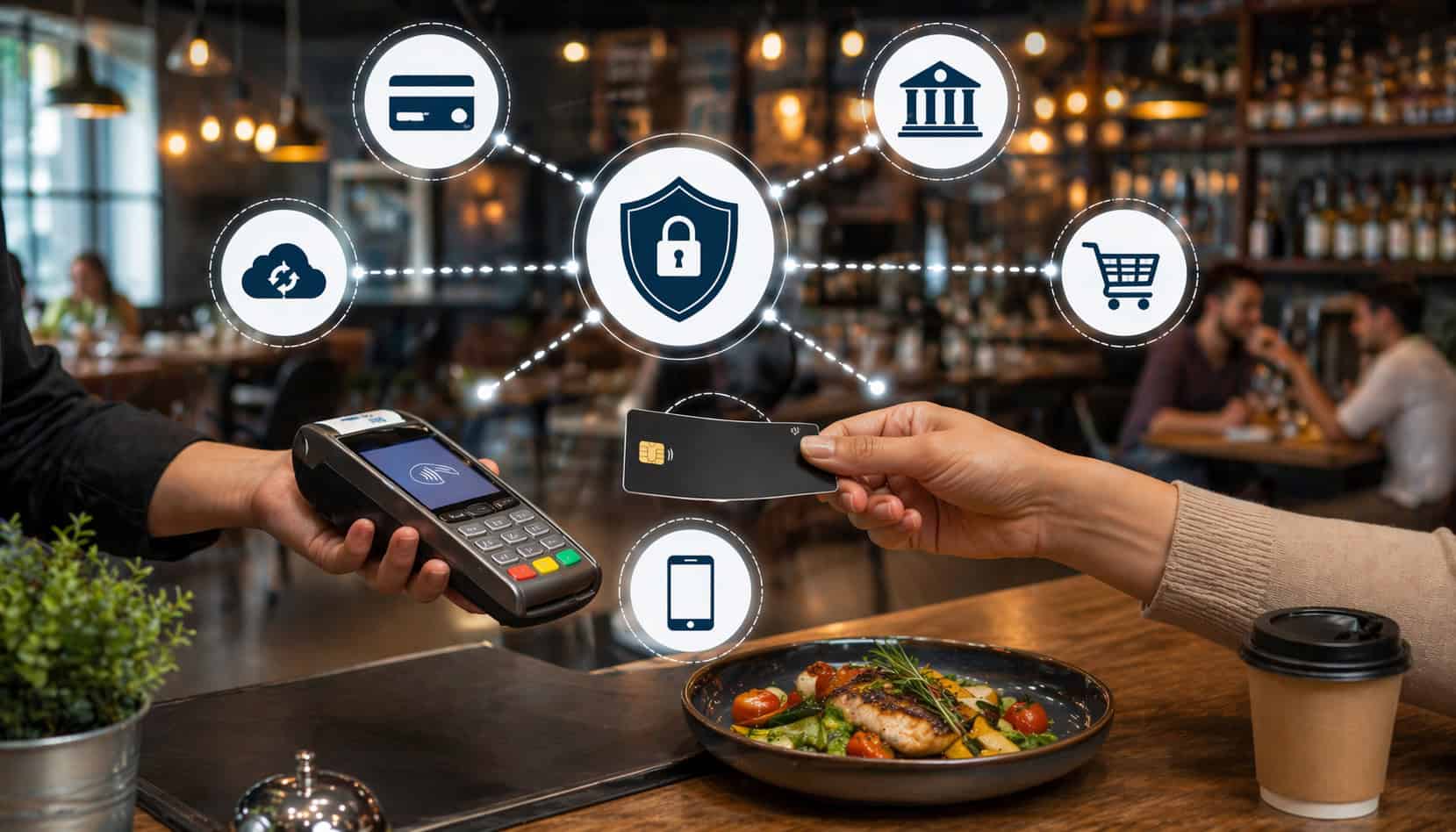
Digital payments are now woven into almost every part of restaurant operations. Guests tap a card at the counter, save a card for catering, pay ahead for pickup, add a tip on a handheld device, scan a QR code at the table, or place an order online without ever speaking to staff.
For restaurant owners and managers, that convenience on the guest side depends on a lot of moving parts working smoothly behind the scenes.
That is where a payment gateway for restaurants comes in. It plays a central role in moving payment information securely from the point where a guest enters card details to the systems that approve, route, and record the transaction.
Even though guests never see it, the gateway can affect checkout speed, order flow, payment security, staff efficiency, reporting accuracy, and even how easy it is to handle refunds or fight chargebacks.
For restaurants, the topic matters even more than it does in some other industries. Food businesses often deal with a mix of in-person and card-not-present payments, online ordering, third-party delivery, curbside pickup, preorders, tabs, tips, deposits, and repeat customers.
A restaurant that only thinks about “taking cards” may miss how important the right payment setup is to the guest experience and daily operations.
This guide explains what a payment gateway for restaurants is, what it actually does, how it fits into a modern restaurant digital payment system, and what owners should look for when comparing options.
It also breaks down how a gateway differs from a processor, merchant account, POS system, and business bank account so the entire picture feels easier to understand and apply in the real world.
What a Payment Gateway for Restaurants Really Is
A restaurant payment gateway is the technology that securely captures payment details and sends them through the right channels so a transaction can be authorized and completed. In simple terms, it acts like a secure digital bridge between the guest’s payment method and the financial systems involved in approving the sale.
When a guest enters card details online, taps a card on a device, or pays through a restaurant app, the gateway helps move that payment data safely.
It encrypts sensitive information, transmits it to the processor or acquiring side of the payment flow, and helps return an approval or decline response to the restaurant’s ordering or checkout system. Without that secure handoff, the restaurant cannot reliably accept many digital payments.
For restaurants, the gateway becomes especially important when payments happen outside a traditional countertop card terminal.
Think about online ordering, curbside pickup, stored cards for repeat guests, mobile checkout links, deposits for private dining, and ecommerce-style transactions such as gift card purchases. In those situations, the online payment gateway for restaurants is not a side feature. It is a core part of getting paid.
The term can be confusing because many restaurant owners hear words like gateway, processor, merchant account, and POS used almost interchangeably. They are connected, but they are not the same thing. A gateway does not replace all the other components. Instead, it helps them communicate securely and in the right order.
A good gateway also does more than pass along card numbers. It can support fraud controls, tokenization, address verification, digital wallet acceptance, payment confirmations, and integration with restaurant systems.
In a modern restaurant payment processing gateway setup, the gateway often becomes part of a larger ecosystem that includes online ordering, in-store payment devices, reporting tools, and a payment gateway restaurant POS integration.
What the gateway does behind the scenes
Behind the guest’s quick tap or checkout click, several things happen in seconds. The gateway captures the payment details, encrypts them, packages the information in a secure format, and sends it onward for approval.
If the transaction is approved, the gateway helps relay that response back to the ordering or POS system so the order can move forward.
This matters because restaurants often need more than a simple yes-or-no approval. They may need the payment response to trigger an order confirmation, send a ticket to the kitchen, mark a pickup order as paid, store a payment token for a future tip adjustment, or match the payment to a specific guest tab. That is why the gateway has operational value beyond security alone.
A secure payment gateway for restaurants may also support tokenization, which replaces raw card data with a token that can be reused for specific approved purposes.
That is useful for saved cards, refunds tied to the original transaction, repeat catering clients, or reservation deposits. The restaurant gets functionality without needing to store sensitive card data in a risky way.
The gateway may also apply fraud screening rules before a transaction is sent forward. For card-not-present restaurant online ordering payments, this can include checks for unusual behavior, mismatched billing data, or repeated attempts. These controls do not eliminate fraud, but they can help reduce preventable problems.
Why restaurants need a specialized understanding of payment gateways
A payment gateway is not unique to restaurants, but restaurants use it in ways that create special operational needs. A retailer may simply authorize a transaction and hand over a product. A restaurant often has to connect the payment to modifiers, prep timing, tips, refunds, order channels, and guest communication.
For example, an online burger order with customizations, a timed pickup window, an added tip, and a text confirmation requires more coordination than a basic ecommerce sale. The gateway needs to work smoothly with the online ordering flow so the guest sees a clear confirmation and the restaurant sees accurate payment status before starting the order.
Full-service restaurants also have their own complexity. A gateway may need to support preauthorization, final tip adjustment, split checks, partial refunds, and handheld tableside payments.
Quick-service operations may care more about speed, contactless acceptance, digital wallets, and line-busting during rush periods. Multi-location operators may need centralized reporting and consistent payment behavior across stores.
That is why choosing a payment gateway for restaurants should not be treated like choosing a generic website plugin. The right fit depends on how orders are taken, how payments are accepted, and how deeply the gateway needs to connect to the rest of the restaurant’s systems.
Payment Gateway vs Processor vs Merchant Account vs POS vs Bank Account
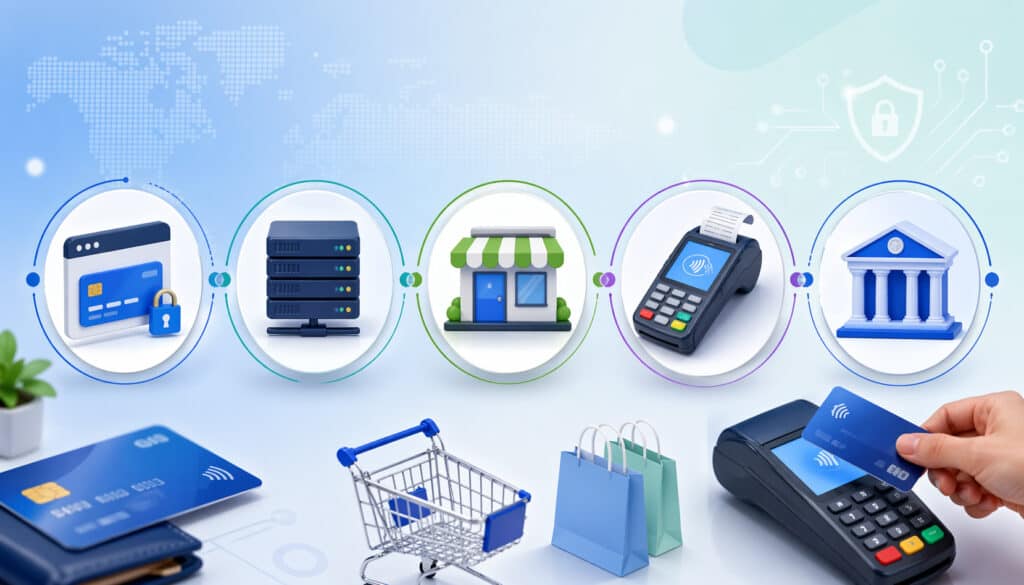
Many restaurant owners first encounter payment terminology when comparing rates or setting up a POS. That is often where confusion starts. The easiest way to make smart decisions is to separate the roles clearly.
A payment gateway is the secure technology layer that transmits payment information. A processor handles the movement of funds and transaction routing through the payment networks.
A merchant account is the account used to receive card payments before funds are deposited. A POS system manages orders, tickets, sales activity, and in many cases device-based checkout. A business bank account is where the restaurant eventually receives its money.
These parts may be bundled together by one provider, or they may be offered by different companies. A restaurant may barely notice the difference when everything works. But the distinction becomes important when something breaks, fees are hard to understand, or systems do not integrate well.
The biggest mistake is assuming the gateway does all the work. It does not. The gateway helps the data move securely. The processor handles the transaction routing and movement of funds. The merchant account supports settlement. The POS records and organizes restaurant activity. The bank account is where the money lands after processing.
Here is a practical comparison:
| Component | Main job | What restaurants use it for | What it does not do by itself |
| Payment gateway | Securely captures and transmits payment data | Online ordering, mobile checkout, QR code payments, payment data flow | It does not hold funds or operate the whole restaurant |
| Payment processor | Routes transactions and helps move money | Card approvals, settlement, transaction processing | It does not manage the full guest order experience |
| Merchant account | Holds card funds temporarily before deposit | Receiving card sales before payout | It is not a checking account for daily expenses |
| POS system | Manages orders, tickets, menus, staff actions, and sales | Counter orders, tableside service, tips, refunds, reporting | It is not automatically a gateway or processor unless integrated |
| Business bank account | Receives deposited funds | Final payout destination | It does not authorize card transactions |
How the gateway differs from the processor
A restaurant payment processor is often the part that actually communicates through card networks and banking channels to authorize and settle a transaction. The gateway, by contrast, is the secure front-end connector that captures the payment information and sends it where it needs to go.
Think of it this way: if the processor is the engine moving the transaction through the financial system, the gateway is the secure entry and transmission layer. Restaurants often need both, even if they appear bundled together in one offering.
That is why some owners think they “have processing” and assume they have no need to think about the gateway. In reality, the gateway still shapes checkout experience, integration quality, and security handling.
This becomes even more obvious in online ordering. If a guest places an order on the restaurant’s website, the restaurant ecommerce payment gateway is usually doing critical work before the processor ever returns an approval. It captures the card details, encrypts them, may run checks, and then relays the authorization response back to the ordering system.
When a restaurant compares providers, it helps to ask whether the gateway and processor are tightly integrated, loosely connected, or offered by separate partners. That answer affects support, data visibility, setup complexity, and long-term flexibility.
How the gateway differs from the POS system and merchant account
A POS is the operational system restaurant staff interact with. It tracks menu items, modifiers, table assignments, discounts, order timing, employee actions, and sales reports.
A gateway may connect to the POS, but it is not the same thing. If the POS says an order is paid, that status may depend on the gateway and processor sending the right response back into the POS.
The merchant account also causes confusion. Restaurant owners sometimes use the term to mean their whole payments relationship, but it has a narrower role. It is part of the financial setup that receives card payments before funds are transferred to the restaurant’s bank account. It matters for settlement and funding, but it does not replace the gateway or the POS.
This distinction becomes important when troubleshooting. If online orders are coming in but not showing as paid, the issue may be with the gateway or integration. If approvals are fine but deposits look off, the issue may relate more to settlement or merchant account handling. If staff cannot match payments to tickets, the problem may be in the POS workflow.
How a Payment Gateway for Restaurants Works Across Different Order Types
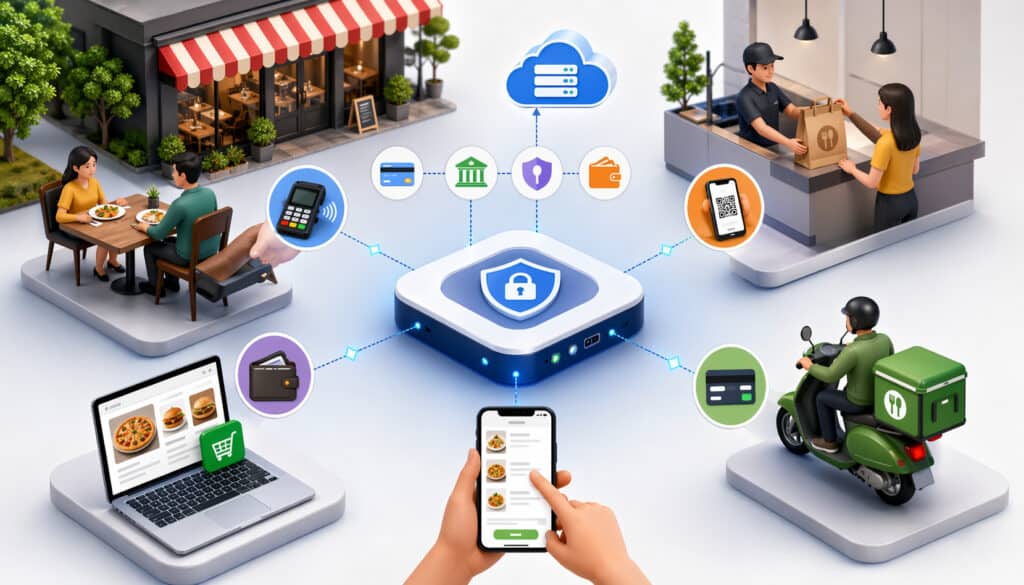
A payment gateway for restaurants works differently depending on how the guest is ordering and paying. That is why restaurant operators should evaluate payment flows by channel, not just by headline features.
The same gateway may support online ordering, QR payments, mobile pay links, and in-store transactions, but the experience and risk level can vary a lot.
At a high level, the workflow is straightforward. The guest enters or presents payment information. The gateway captures and encrypts the data. The payment request is sent onward for authorization.
The result comes back to the restaurant’s ordering or POS system. If approved, the order continues through the normal workflow. If declined, the system needs to show the guest and staff what happened so they can retry or use another method.
Where it gets more interesting is how those steps affect restaurant operations. A card-not-present online order may require fraud checks and a clear order confirmation before the kitchen starts prep.
A tableside payment might need tip adjustment support. A QR code checkout might need fast mobile compatibility and an easy guest interface. Curbside pickup might require payment confirmation before a staff member walks the food outside.
In every case, the gateway is helping connect the guest-facing payment action with the restaurant’s internal systems. The quality of that connection shapes speed, accuracy, and trust.
Online ordering, delivery, and pickup payments
For restaurant online ordering payments, the gateway is often doing some of its most visible work. A guest visits the restaurant’s website or app, builds an order, chooses pickup or delivery, enters payment details, and expects a fast, secure checkout.
If the gateway performs well, the guest sees a smooth payment experience and a clear confirmation. If it performs poorly, the order may fail, duplicate, or create uncertainty.
A strong online payment gateway for restaurants helps reduce checkout friction. It supports mobile responsiveness, digital wallets where relevant, saved-card options if appropriate, and clean integration with the order platform. It also returns approval results quickly enough that the order can move into the kitchen flow without confusion.
This matters operationally. If the payment status does not sync correctly, staff may waste time calling guests, remaking tickets, or holding orders while trying to confirm payment. For delivery and pickup concepts, those delays can directly affect food quality and guest satisfaction.
Take a small takeout-focused concept during a Friday dinner rush. If the ordering page accepts the order but fails to confirm payment clearly, staff may either prepare unpaid food or delay preparation for paid orders.
Neither outcome is good. The gateway needs to support reliable checkout and immediate payment status communication.
Mobile checkout, QR code payments, and card-not-present transactions
Restaurants are using more flexible payment flows than ever. Some send payment links by text for catering balances. Some let guests scan a QR code to pay without waiting for a check presenter.
Some accept card details over the phone for deposits or special orders. All of these are higher-friction or higher-risk than a standard chip dip at the counter if the workflow is not designed well.
A restaurant digital payment system should make those experiences feel simple for guests while keeping the backend controlled.
For QR code payments, the gateway usually needs to open a mobile-friendly payment page, display the right amount, and return confirmation back to the restaurant quickly. If the mobile experience is clunky, guests may abandon the payment or call staff over anyway.
For card-not-present payments, fraud risk is higher than in many in-person scenarios, so the gateway’s screening tools matter more. Restaurants accepting prepaid catering orders, holiday meal packages, or reservation deposits should pay close attention to how the gateway handles verification, declined cards, and duplicate attempts.
A full-service restaurant using QR checkout may also need the gateway to work with split checks, final tip entry, or partial payments. A café using text-to-pay for special orders may care more about link delivery, quick settlement visibility, and easy customer communication. The use case changes, but the principle stays the same: the gateway has to fit the service model.
Why Payment Gateways Matter So Much in Modern Restaurant Operations
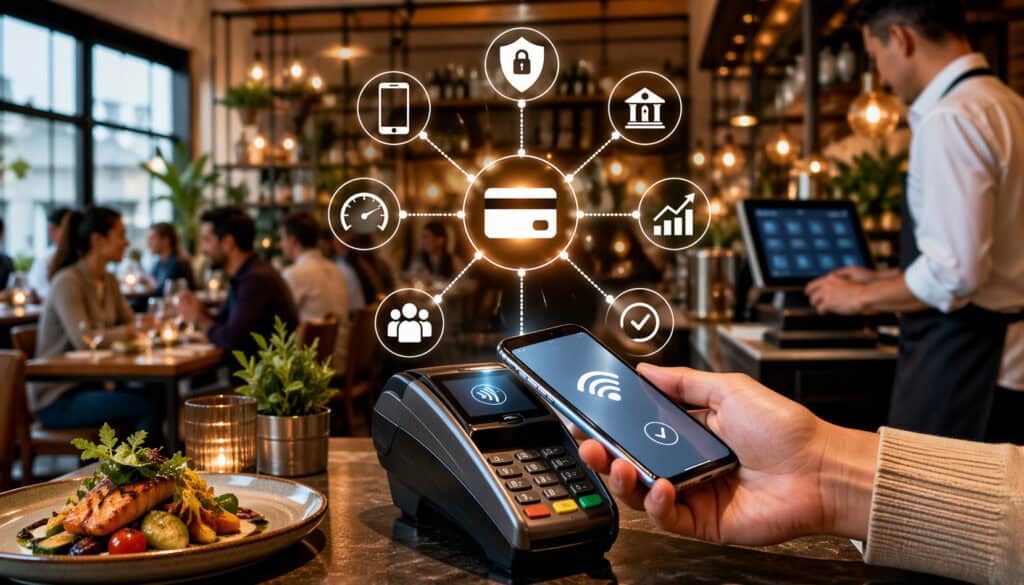
Some restaurant owners think of the gateway as a technical checkbox. In practice, it has a real effect on how smoothly the business runs.
The right gateway helps a restaurant move faster, reduce confusion, protect payment data, and keep front-of-house and back-of-house activity aligned. The wrong one can slow down service, create failed transactions, split payment records across systems, and frustrate both guests and staff.
Restaurants operate in a high-speed environment where small payment issues get magnified quickly. A failed payment at an ecommerce store might create one support email. A failed payment at a busy lunch counter can create a backed-up line, a delayed order, and a stressed cashier.
A mismatch between online order payments and POS data can cause prep mistakes, refund problems, and hours of reconciliation later.
A good restaurant payment processing gateway supports cleaner data flow. That means the approval status, order status, refund status, and reporting details all line up in a way that makes sense. That sounds simple, but it is one of the biggest practical differences between a well-designed payment stack and a messy one.
It also matters for guest trust. Diners may not know what gateway a restaurant uses, but they do notice when checkout feels smooth and secure. They notice when they can pay quickly online, when the order confirmation arrives right away, and when refunds are handled correctly without repeated calls.
Smoother guest experiences and fewer operational bottlenecks
Guests remember friction. They may not describe it as a gateway issue, but they feel it when checkout fails, when they are charged twice, when a pickup order is not marked paid, or when a QR payment takes too long to load.
In restaurant settings, payment problems happen at a point in the experience where patience is already thin. People are hungry, in a rush, or trying to leave quickly.
A strong secure payment gateway for restaurants helps remove these pain points. It can speed up online checkout, reduce manual payment re-entry, support contactless flows, and return approval responses fast enough for staff to act confidently. That improves both service pace and guest perception.
Consider a quick-service restaurant during a lunch rush. Seconds matter. If the payment system is integrated well, staff can move orders through without retyping totals into separate devices or guessing whether a mobile order really went through. The result is not just faster payment. It is faster service overall.
For full-service restaurants, tableside and mobile-enabled payments can shorten the time between guest decision and table turnover. For pickup-heavy concepts, reliable online payment confirmation reduces awkward “Did you already pay?” moments at the counter.
Better security, cleaner reporting, and easier decision-making
Security matters for obvious reasons, but it also affects operations. A gateway with encryption, tokenization, and sensible fraud tools helps reduce exposure while supporting useful features such as saved cards, repeat orders, or refund-to-original-payment workflows.
That balance matters because restaurants need convenience without opening themselves to unnecessary risk.
Reporting is another major benefit. When the gateway integrates well with the POS and order channels, payment records are easier to match to tickets, tenders, tips, refunds, and deposits. That makes closeout easier and reduces the amount of manual investigation managers have to do.
This is especially valuable for operators trying to understand performance across channels. If dine-in, pickup, delivery, gift cards, and catering payments all live in separate tools with weak synchronization, reporting becomes harder to trust.
A cleaner data flow makes it easier to analyze sales, labor, promotions, and menu performance. That becomes even more useful when paired with operational reporting tools, such as restaurant POS insights and menu analytics discussed in resources like how to use POS data to optimize your menu.
Core Features Restaurants Should Understand Before Choosing a Gateway
Not every restaurant needs every feature, but every operator should understand the core capabilities that shape payment reliability and usability. Features often sound impressive in demos, yet the real question is whether they solve actual restaurant problems.
A payment gateway for restaurants should first handle the basics well: secure data transmission, fast authorization responses, and dependable integration with the ordering or POS system. From there, restaurants need to evaluate supporting features based on their service model, order channels, and risk profile.
For example, a small café focused on in-person transactions may care most about contactless support, reliability, and simple reporting. A catering-heavy operator may need payment links, saved customer profiles, deposit support, and strong card-not-present fraud controls. A multi-location group may care more about centralized reporting and consistent behavior across stores.
The most useful way to think about features is to divide them into four groups: security, guest checkout tools, operational integration, and reporting. That keeps the conversation grounded in daily use instead of marketing buzzwords.
Security features: encryption, tokenization, and fraud screening
A secure payment gateway for restaurants should protect payment information from the moment it is entered or captured. Encryption helps ensure data is unreadable if intercepted during transmission. Tokenization replaces sensitive card details with a token that can be used for approved future actions without exposing the original card number.
These features matter because restaurants increasingly accept payments across multiple channels. Guests may order on a website, pay from a phone, save a card for repeat catering orders, or request a refund to the original form of payment. The gateway should support those workflows without forcing the restaurant to store raw payment data.
Fraud tools are also important, especially for card-not-present transactions. Depending on the setup, a gateway may support address verification, suspicious activity checks, duplicate payment detection, and rules that flag abnormal behavior. None of these tools make fraud disappear, but they can reduce avoidable issues.
Restaurants should ask how these tools affect the guest experience. Overly aggressive fraud screening can block good customers. Weak screening can let risky transactions through. The right balance depends on your order mix, average ticket size, and whether you handle a lot of prepaid or remote payments.
Checkout, integration, and reporting features
Guest checkout features shape conversion and convenience. Restaurants should look for support for mobile-friendly checkout, digital wallets where relevant, clear payment confirmations, and saved-card or recurring payment support when the business model calls for it. This is especially useful for catering, subscriptions, repeat office lunches, or deposits.
Integration features are equally important. A gateway that “works” but does not sync smoothly with the restaurant’s ordering platform or POS can still create operational chaos. Payment confirmation should update the order status.
Refunds should flow back cleanly. Tips should map correctly. Staff should not need to bounce between multiple dashboards just to understand what happened.
Reporting features matter because payment questions always come up later. Managers need to see approvals, declines, refunds, chargebacks, payment methods, settlement timing, and channel-level performance. If the gateway hides important details or splits data across tools, routine investigation becomes harder than it should be.
For operators evaluating broader setup choices, it helps to understand how payments fit into restaurant POS infrastructure overall. A resource like how a restaurant POS system works can help connect the dots between orders, payments, reporting, and daily operations.
How Payment Gateway Restaurant POS Integration Affects Daily Operations
The phrase payment gateway restaurant POS integration can sound technical, but its impact is very practical. It determines whether orders and payments stay connected in a way that saves staff time and reduces mistakes.
When a gateway is deeply integrated with the POS, payment approvals update the check automatically, refunds can be initiated from the same workflow, and reporting reflects what actually happened on the floor.
When the integration is weak, staff may need to re-enter totals, close checks manually, reconcile two different systems, or call support just to verify a payment.
For restaurants, this integration affects much more than the final payment step. It shapes how quickly orders move from paid status to kitchen production, how tips are handled, how split checks work, and how easy it is to trace the full life of a ticket later. That is why restaurants should evaluate payment integration as an operational workflow, not just a technical connection.
Different restaurant models will feel these effects in different ways. A quick-service concept may care most about line speed and reducing cashier errors.
A full-service restaurant may care more about handheld payments, tip adjustment, and closing checks smoothly. A multi-location operator may focus on consistency, reconciliation, and centralized visibility.
Order flow, payment confirmation, tips, and refunds
In a well-integrated setup, the POS sends the right amount to the payment device or checkout page, the gateway helps obtain approval, and the result comes back into the POS automatically. That means the order or check is updated without staff needing to do extra steps.
This matters immediately in online ordering and pickup. If the payment confirmation does not sync, staff may see an order with unclear status. That can lead to delayed prep or accidental unpaid handoff. In full-service dining, the same principle applies when closing checks, adding tips, or handling split tenders.
Refunds are another area where integration quality shows up fast. If managers have to refund a transaction in one system and manually adjust a ticket in another, reporting gets messy. Better integrations keep the payment record and order record aligned.
Tips also deserve attention. Restaurants need to know whether tip prompts appear at the right stage, whether post-authorization tip adjustments are supported where needed, and how those values flow into reporting. A polished integration can save hours of closeout confusion over time.
Reconciliation, communication, and staff confidence
Managers spend a lot of time solving payment mysteries. Was the card approved? Did the guest get charged twice? Was that refund completed? Why is the deposit different from the POS total? Good integration reduces those mysteries because the systems talk to each other clearly.
Reconciliation becomes easier when the payment data and order data stay tied together. This is especially useful for restaurants that handle multiple channels, tips, gift cards, or frequent adjustments.
It also makes merchant statement review less painful, especially when operators understand how fees and transaction records should line up, as explained in how to read a restaurant merchant statement line by line.
Customer communication improves too. When staff can see whether a payment was approved, pending, refunded, or declined, they can give guests accurate answers quickly. That builds trust and reduces unnecessary conflict at the counter or over the phone.
Most importantly, staff confidence improves when the payment process feels predictable. Cashiers stop guessing. Managers spend less time correcting records. Guests get clearer answers. The system feels like one workflow instead of a patchwork of separate tools.
The Role of an Online Payment Gateway for Restaurants in Digital Sales
For many restaurants, digital revenue no longer sits off to the side. Direct online ordering, catering invoices, prepaid specials, deposits, and gift card purchases can all depend on a reliable online payment gateway for restaurants. That makes the gateway a direct contributor to revenue capture, order accuracy, and guest trust.
When digital sales are handled well, guests can order quickly, pay securely, and receive clear confirmation. Staff can see what was paid, what still needs action, and how the order should flow into prep or service.
When digital sales are handled poorly, confusion spreads fast. Orders may fail halfway through checkout, payments may not sync to tickets, and staff may not know whether to prepare the order.
This is why restaurants should think about the gateway as part of their digital storefront. It affects conversion rates, abandonment, and how polished the ordering experience feels.
It also plays a role in how well restaurants manage future-oriented transactions such as scheduled catering orders, reserved-event deposits, or repeat customer accounts.
For operations trying to build stronger direct sales channels, the gateway is not just a payment utility. It is part of the customer experience.
Direct online ordering, catering payments, and reservation deposits
A restaurant ecommerce payment gateway supports transactions that look more like ecommerce than traditional dining-room checkout.
Guests may order takeout online, pay for a catering package in advance, buy a digital gift card, or put down a deposit for a private event. In all of these cases, the gateway has to support clarity, trust, and secure completion.
For direct online ordering, the gateway should make checkout simple and mobile-friendly. Guests should understand the total, choose a payment method easily, and receive clear confirmation after payment. The system should then update the restaurant’s ordering workflow without delays or double handling.
Catering payments often require more flexibility. Restaurants may need partial deposits, final balance payments, saved customer details, or manual adjustments. Reservation deposits and special event bookings can raise similar needs. A generic setup that only supports one-time checkout may not be enough for these use cases.
Gift card purchases also rely on the gateway in many restaurant systems. If the payment experience is clunky or untrustworthy, guests may abandon the purchase. During busy seasons, that matters.
Supporting a consistent digital experience across channels
Restaurants often underestimate how much guests compare their digital experience to any other business they buy from online. They expect fast checkout, secure card handling, responsive mobile pages, and instant confirmation. If a restaurant’s payment page feels outdated or confusing, it can hurt conversion even when the food and service are excellent.
That is why the gateway should support consistency across direct ordering, mobile checkout, gift cards, and other digital touchpoints. A guest should not feel like they are encountering a different quality level every time they pay.
This also affects operations. If each digital channel uses a separate payment process, the restaurant may end up with duplicate records, scattered reporting, and extra support work. A more unified gateway setup gives managers cleaner visibility and fewer moving parts to manage.
Restaurants building stronger digital sales often also need the operational side to keep up. That means pairing payment flow with setup and menu control. Helpful background reading can come from resources on how to set up a restaurant POS system and related ordering workflows so digital transactions connect cleanly to real-world service.
Common Challenges Restaurants Face With Payment Gateways
Even a strong gateway setup will not remove every payment issue. Restaurants still deal with failed payments, integration gaps, chargebacks, guest confusion, and fee complexity. The goal is not perfection. The goal is to choose a system that reduces preventable problems and makes the remaining ones easier to manage.
Many problems happen because the restaurant expects the gateway to solve everything on its own. In reality, the payment experience depends on the gateway, processor, POS, ordering system, device setup, internet reliability, staff training, and workflow design. A weak link anywhere can create visible problems.
That said, some challenges are closely tied to gateway quality and fit. If the gateway is slow, poorly integrated, or hard to understand, those issues tend to show up repeatedly across order channels. Operators should know what to watch for so they can ask better questions before choosing a system.
Failed payments, integration issues, and checkout friction
Failed payments are not always caused by fraud or insufficient funds. They can also result from timeout issues, mobile browser problems, weak order platform integration, or mismatched settings between the gateway and POS. When these failures happen, the restaurant needs a way to understand the reason quickly.
Checkout friction is another common issue. Too many steps, unclear error messages, a poor mobile layout, or limited payment methods can all reduce completion rates. This matters most for online ordering and QR or mobile payments, where there is no staff member standing beside the guest to help.
Integration issues often show up after the payment is technically approved. The order may not update correctly, the refund may not sync, or the POS may show a different status than the payment platform. These issues waste manager time and make staff less confident.
A quick-service restaurant may notice these problems as line slowdowns and duplicate charges. A full-service concept may see them in awkward tableside moments or messy refund handling. A delivery-focused operation may feel them most through guest support calls and delayed prep decisions.
Confusing fees, duplicate systems, and chargeback exposure
Fee structures can be surprisingly hard to understand. Some restaurants focus only on the processing rate and overlook gateway fees, monthly platform charges, device costs, support fees, or add-on costs for online ordering and stored payments. That makes it harder to compare providers fairly.
Duplicate systems create another major headache. A restaurant may use one tool for POS payments, another for online checkout, and another for catering invoices. If those systems do not share cleanly, reporting becomes harder and staff must learn multiple workflows.
Chargebacks are a real concern, especially for card-not-present orders, phone payments, and high-ticket catering sales. A gateway cannot stop all disputes, but it can support better documentation, fraud checks, and cleaner transaction records. Operators should understand what evidence and transaction details will be available if a dispute happens.
Resources that explain payment costs and methods in a restaurant context can help owners prepare better questions, including guides on common restaurant payment methods and related fee discussions.
What to Look for in a Secure Payment Gateway for Restaurants
When comparing options, restaurants should focus on fit, not just features. A gateway may look powerful on paper and still be a poor match for a specific service model. The best choice is one that supports the restaurant’s actual payment mix, works reliably with its ordering and POS systems, and gives staff enough visibility to manage issues without constant support calls.
A secure payment gateway for restaurants should first deliver reliability and clear security handling. From there, restaurants should evaluate speed, ease of integration, reporting quality, fee transparency, and support responsiveness. These factors tend to matter more over time than small differences in headline pricing.
For a small café, simplicity and ease of use may matter most. For a quick-service restaurant, checkout speed and online order flow may be the priority. For a full-service operator, tips, handhelds, and refund handling may be central. For a multi-location group, centralized control and consistent reporting across units may drive the decision.
The right evaluation process is practical, not theoretical. Restaurants should compare how the gateway behaves in the specific situations that happen during a normal week.
Reliability, speed, security, and integration depth
Reliability should be near the top of the list. Restaurants need to know the gateway can handle peak volume, return clear authorization results, and stay stable across web, mobile, and POS channels. A short outage or delayed response can create a surprisingly large operational problem during busy periods.
Speed also matters. Slow checkout hurts guest satisfaction and can lower online conversion. Ask about transaction response times, mobile optimization, and how the system behaves under load. In quick-service and counter environments, even small delays are noticeable.
Security should include encryption, tokenization, reasonable fraud controls, and a clear explanation of how sensitive payment data is handled. Restaurants do not need to become security experts, but they should understand enough to know whether the setup is reducing risk or pushing responsibility back onto them.
Integration depth matters because shallow integrations create extra work later. The gateway should not just process the payment. It should support the order flow, tip flow, refund workflow, and reporting structure that the restaurant actually uses.
Reporting quality, support, and transparent pricing
Good reporting helps managers answer everyday questions without guesswork. Can they see which payments failed? Can they match refunds to tickets? Can they compare digital orders with in-store payments? Can they trace a chargeback to the original order? These are practical questions, not technical luxuries.
Support also matters more than many restaurants expect. Payment problems are time-sensitive. If orders cannot be paid or refunds are not working, waiting days for help is not acceptable. Operators should ask who handles support, what hours are available, and whether gateway, processor, and POS issues require separate contacts.
Pricing should be transparent enough that a manager can explain the structure without reading a contract three times. That does not mean everything will be simple, but it should be understandable.
Ask about gateway fees, monthly charges, setup costs, device fees, online ordering costs, refund fees, chargeback fees, and whether pricing changes with volume or channel.
Real-World Restaurant Scenarios: How Needs Change by Concept
A payment gateway should match how a restaurant actually makes money. The same solution will not feel equally effective for every concept. Looking at real-world scenarios helps restaurant owners see what matters most for their specific operation.
A small café may value simplicity and fast tap-to-pay. A quick-service restaurant may care most about online ordering and peak-hour throughput. A full-service restaurant may need strong tableside support and tip handling.
A takeout-focused concept may depend heavily on card-not-present flows. A multi-location group may need unified reporting and channel consistency.
These scenarios are useful because they shift the conversation away from generic feature lists and toward actual operational fit.
Small café, quick-service restaurant, and full-service restaurant
A small café often needs a gateway that works quietly and reliably. Guests move fast, average tickets may be modest, and mobile friendliness still matters because many customers order ahead. The owner likely wants quick setup, clean reporting, and minimal time spent on payment administration.
A quick-service restaurant has higher throughput pressure. Checkout speed, digital wallet support, reliable online ordering integration, and clear paid-status communication matter a lot. A delay of just a few seconds per order can add up during a lunch rush. If online orders make up a meaningful share of sales, the gateway becomes central to daily service.
A full-service restaurant introduces more complexity. The gateway may need to support preauthorization, final tip adjustment, split checks, handheld or tableside payment devices, and refund handling that maps cleanly back to the guest check. Staff training also matters more because there are more ways a payment can be modified before the table closes.
In all three models, the gateway matters. The difference is which problems the restaurant most wants it to solve.
Takeout-focused concept and multi-location operation
A takeout-first restaurant depends heavily on restaurant online ordering payments and card-not-present transactions. That means the gateway should support clean mobile checkout, reliable order confirmation, fraud screening that is helpful but not overly aggressive, and clear communication back to staff and guests.
If the operation offers scheduled orders, family meals, or catering add-ons, saved payment options and good order-status syncing become even more useful.
A multi-location operation needs visibility and consistency. Managers want to know that checkout behavior, reporting rules, and payment status handling work the same way across locations. A gateway that performs fine for one store can become a headache at scale if reporting is fragmented or support is inconsistent.
Multi-location groups also tend to care more about centralized oversight, standardized refund rules, shared customer data policies, and cleaner reconciliation across channels. A gateway that scales well can reduce the number of one-off fixes each store manager has to invent.
Common Mistakes Restaurants Make When Choosing a Payment Gateway
Restaurants often make payment decisions under pressure. Maybe they are opening soon, replacing an old POS, adding online ordering fast, or reacting to confusing processing fees. In those moments, it is easy to focus on one appealing detail and miss the bigger picture.
One of the most common mistakes is confusing the gateway with the processor. When owners do not separate those roles, they can end up with a system that technically processes payments but does not integrate well with the restaurant’s ordering or POS workflows.
Another common mistake is choosing mainly on price. A cheaper setup can become more expensive if it causes failed orders, reconciliation work, or staff confusion.
Restaurants also underestimate the importance of real testing. A provider may demonstrate a clean dashboard, but if the guest checkout flow is clumsy or the refund process is buried, those problems will show up later in daily operations.
Choosing on price alone or ignoring integration depth
Price matters. Restaurants should absolutely compare costs. But price alone is a weak decision tool if it hides operational costs. A lower monthly fee does not help much if the system creates duplicate work, messy reporting, or missed online orders.
Integration depth is where many hidden costs live. If online orders do not sync cleanly, if the POS and payment records do not match, or if refund handling is awkward, managers end up doing manual cleanup. That labor cost rarely appears on the rate sheet, but it affects profitability.
Another mistake is assuming all “integrated” systems work the same. Some are deeply connected. Others are only loosely connected through a gateway layer that may not support the full set of restaurant workflows. That difference matters a lot for tips, split payments, refunds, and channel reporting.
Failing to test the guest experience and staff workflows
Restaurants should test the actual guest journey, not just the admin portal. That means trying online checkout on a phone, running a QR payment, testing an in-store payment, processing a refund, and seeing how the order status changes. If possible, test what happens when a payment is declined.
Staff workflows deserve equal attention. How many steps does it take to close a check? How is a duplicate payment handled? Can a manager see why an online order failed? Are refunds intuitive? Can staff explain the process confidently to a guest?
A gateway can look fine at a high level and still create daily frustration. The best way to avoid that is to walk through the real transactions your restaurant handles most often.
A Practical Checklist for Choosing or Improving Your Restaurant Payment Gateway Setup
The most useful way to evaluate a payment gateway for restaurants is with a structured checklist tied to real operations. Whether you are choosing a new system or improving your current setup, the process should start with how your restaurant accepts orders and payments today.
Begin by identifying your payment channels. List dine-in, counter, online ordering, catering, deposits, gift cards, QR payments, delivery, and any other recurring transaction types. Then define which of those channels create the most friction, confusion, or cost.
Next, review your current setup. Determine which provider handles the gateway, which handles processing, which systems connect to your POS, and where reporting lives. Many restaurant teams discover they have more separate payment components than they realized.
From there, move into evaluation and testing. A good decision process is not about finding the “best” gateway in the abstract. It is about finding the right one for your workflows, risk profile, and growth plans.
Step-by-step checklist
- Map every payment channel you use today
- Separate gateway, processor, merchant account, POS, and bank account roles
- Identify the channels with the most failed payments or staff confusion
- Review how payment approvals update order status in your POS or ordering system
- Check whether refunds, tips, and chargebacks are visible in one clear workflow
- Evaluate security basics such as encryption, tokenization, and fraud screening
- Test checkout on mobile for online ordering and QR flows
- Ask for reporting examples that show approvals, declines, refunds, and settlements
- Compare total fees, not just transaction rates
- Confirm support structure and escalation paths
- Review contract terms, device rules, and flexibility if you change systems later
- Run live test scenarios that reflect your most common and most complicated transactions
Questions to ask before making a final decision
- How does the gateway handle online ordering, curbside pickup, and card-not-present payments?
- What happens when a payment is approved, declined, or duplicated?
- How do refunds and tip adjustments flow back into the POS?
- Can the system support gift cards, deposits, or repeat customer saved payments if needed?
- What reporting can managers access without contacting support?
- Which fees apply monthly, per transaction, or by channel?
- Who should the restaurant call when something goes wrong: one team or several?
- What implementation steps are required to avoid downtime during launch?
A restaurant does not need the most complex setup to succeed. It needs a payment system that is easy to trust, easy to operate, and aligned with how the business actually serves guests.
Conclusion
A payment gateway for restaurants is more than a technical connector. It is a working part of the guest experience, the payment experience, and the restaurant’s internal operating system. It helps orders move from checkout to approval to execution in a secure, organized way.
For restaurants that accept online orders, curbside payments, mobile checkout, QR payments, deposits, gift card purchases, or any other digital transaction, the gateway plays an even bigger role.
It affects how easy it is for guests to pay, how clearly staff can see payment status, how securely data is handled, and how cleanly everything ties back into the POS and reporting.
The most important takeaway is that restaurants should not evaluate gateways in isolation. They should look at the full payment flow: guest checkout, payment approval, order status, refund handling, tips, reconciliation, and support.
A restaurant payment gateway that fits the real operation can reduce friction, improve trust, and make everyday management easier. That is what makes the right payment gateway for restaurants worth understanding and choosing carefully.